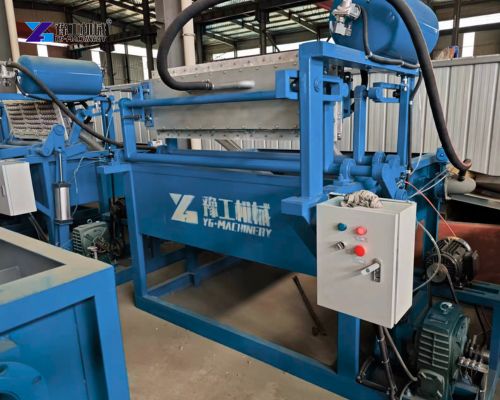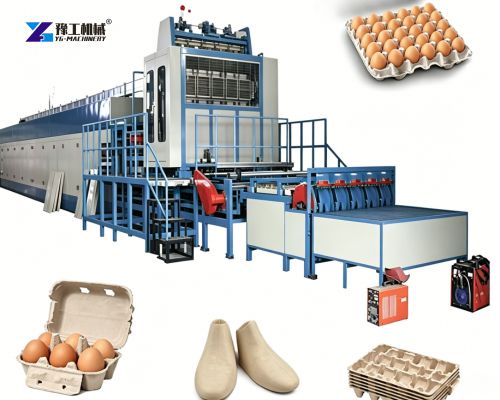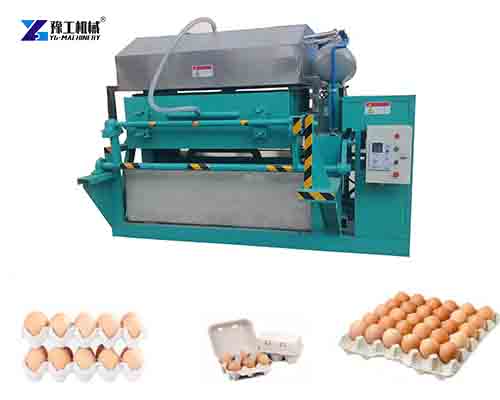
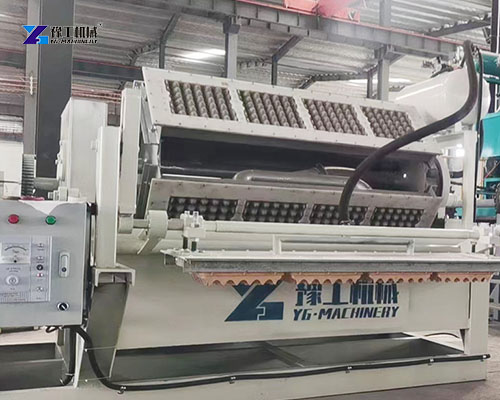
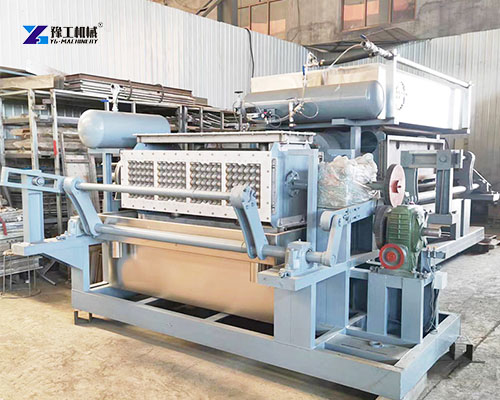
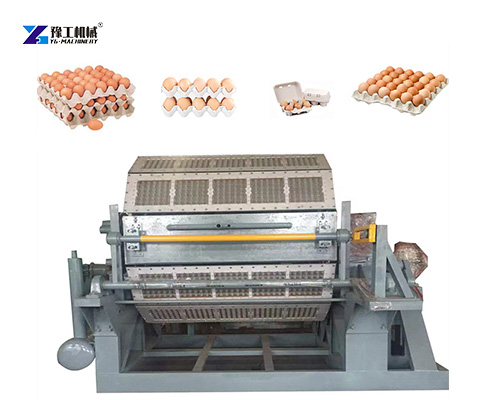
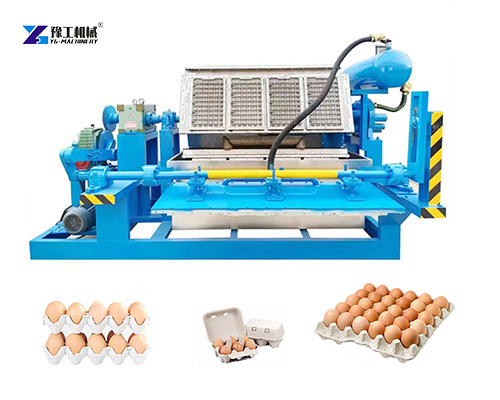
A paper egg tray machine is industrial equipment that turns waste paper into molded pulp egg trays for safe and low cost egg packaging. It is commonly used by poultry farms, egg packaging companies, recycling businesses, and packaging manufacturers. With flexible molds, scalable capacity, and recyclable raw materials, the machine supports both small and large production projects. If you are planning to produce egg trays locally, YG can help you select the right machine based on your product, capacity, and factory conditions.
Get a Paper Egg Tray Machine Price&Specs
Egg Tray Molding Machine: Key Technical Parameters
Choosing an egg tray molding machine starts with the production target. A suitable machine should match your expected order volume rather than simply offering the highest possible output.
| Model | Capacity/H | Power/hour | Paper Consumption/H | Water Consumption/H |
| YG-1500 – 4X1 | 1500pcs/h | 38kw | 120kg | 240kg |
| YG-2500 – 3X4 | 2500pcs/h | 55kw | 200kg | 400kg |
| YG-3000 – 4X4 | 3000pcs/h | 60kw | 240kg | 480kg |
| YG-4000 – 4X8 | 4000pcs/h | 95kw | 320kg | 640kg |
| YG-5000 -5X8 | 5000pcs/h | 95kw | 400kg | 800kg |
| YG-7000 -6X8 | 7000pcs/h | 120kw | 480kg | 960kg |
Actual output depends on the mold design, pulp concentration, machine configuration, product size, and drying method.
For example, a machine rated at 3,000 trays per hour could theoretically produce 24,000 trays during an 8-hour shift. If effective production time is around 90%, the practical calculation is approximately 21,600 trays per day.
This is why buyers should compare complete production conditions instead of comparing only the number shown in a machine catalog.
Get a Paper Egg Tray Machine Quote
How Does a Pulp Egg Tray Making Machine Work?
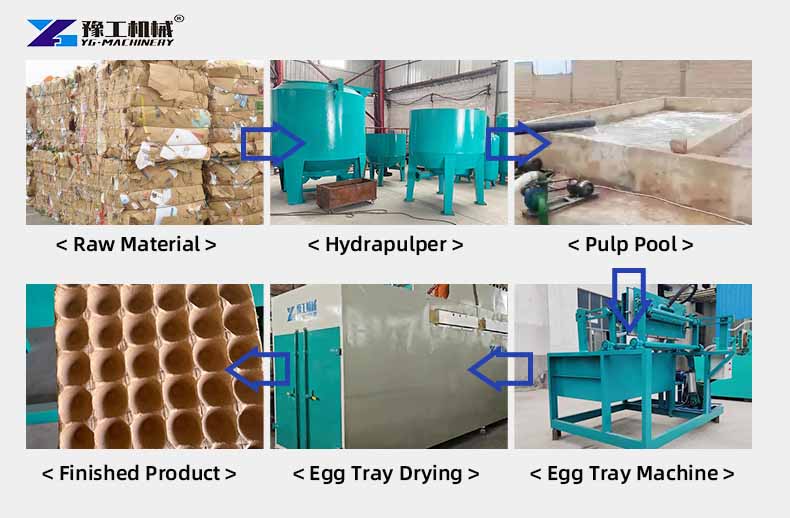
A pulp egg tray making machine converts waste paper into a molded packaging product through several connected processes.
The basic workflow is:
Waste Paper → Pulping → Refining → Mixing → Molding → Dewatering → Drying → Stacking
First, waste paper is mixed with water and processed into pulp. The pulp is then refined and adjusted to achieve a suitable consistency.
During molding, a forming mold picks up the pulp and removes excess water. The wet tray is then transferred to the drying section.
The drying process removes remaining moisture and gives the egg tray enough strength for packing, transportation, and storage.
Why Does Pulp Quality Matter?
Pulp quality has a direct effect on tray thickness, surface appearance, strength, and production stability.
If the pulp is too thick, molding can become difficult. If it is too thin, the finished tray may lack strength.
For this reason, raw material preparation is part of machine performance. A well-designed production line should consider the complete process rather than the forming machine alone.
Q: How does a paper egg tray machine work?
A paper egg tray machine first converts waste paper into pulp. The pulp is refined and mixed with water, molded into trays, dewatered, dried, and finally stacked for packaging or delivery.
Ask YG About the Complete Production Process
Main Benefits of an Egg Carton Machine
An egg carton machine can provide more than an alternative packaging solution. For businesses with access to waste paper and stable egg packaging demand, it can become part of a circular production model.
1. Uses Recycled Paper
Waste newspaper, cardboard, and other suitable paper materials can be processed into pulp. This helps reduce dependence on virgin packaging materials.
2. Supports Local Production
Egg producers can manufacture packaging closer to the point of use. This can reduce dependence on imported trays and provide more control over supply.
3. Flexible Product Design
Different molds can be used for different products. Depending on the machine configuration, the same production concept can be extended to fruit trays, bottle holders, and other molded pulp products.
4. Scalable Production
A small business may start with a lower-capacity system. A larger manufacturer can choose a more automated line with a higher output.
5. Suitable for Recycling Businesses
For recycling companies, the equipment provides a way to convert low-value waste paper into a finished packaging product.
Q: What are the main advantages of a paper egg tray machine?
The main advantages are the use of recycled paper, flexible product options, local packaging production, scalable capacity, and the ability to convert waste paper into a marketable product.
Paper Egg Tray Machine Capacity and Cost Factors
Machine price is important, but it should not be the only factor in a B2B purchasing decision.
The total project investment may include:
- Pulping and refining equipment
- Egg tray molding equipment
- Drying system
- Hot-air or other heating equipment
- Molds
- Conveyors and stacking equipment
- Electrical control system
- Installation and commissioning
- Spare parts
- Transportation
The drying system deserves special attention. In many production projects, drying can significantly influence energy consumption, floor space, and production continuity.
A buyer should therefore compare the total production cost per tray, not just the initial machine price.
For example, if your target market requires 20,000 trays per day, purchasing a machine designed for 8,000 trays per hour may not automatically be the best choice. A smaller system could provide sufficient capacity with a lower initial investment and easier operation.
Q: How much does a paper egg tray machine cost?
The cost depends on production capacity, automation level, mold configuration, drying method, and auxiliary equipment. A complete quotation should be based on the required output and factory conditions rather than a standard machine price.
Request a Production Capacity Calculation
Applications of a Pulp Egg Tray Making Machine
The market for molded pulp packaging extends beyond traditional egg trays.
Poultry Farms
Large poultry farms can produce egg trays for their own packing operations. This can improve packaging supply stability when local tray suppliers are limited.
Egg Packaging Companies
Packaging companies can manufacture trays and supply multiple farms, wholesalers, and food distributors.
Waste Paper Recycling Companies
Recycling companies can add a downstream production process and turn processed waste paper into molded packaging.
Packaging Manufacturers
Businesses with existing molded pulp production experience can explore additional products such as fruit trays and bottle protection inserts.
Export-Oriented Suppliers
Manufacturers serving overseas customers can choose production capacity according to confirmed orders and regional demand.
The important point is to identify your target product before choosing the mold and production capacity.
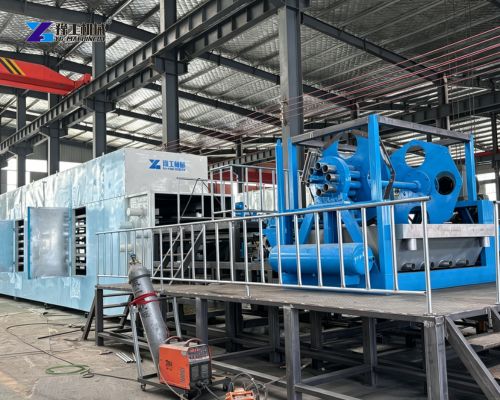
How to Choose the Right Egg Tray Molding Machine
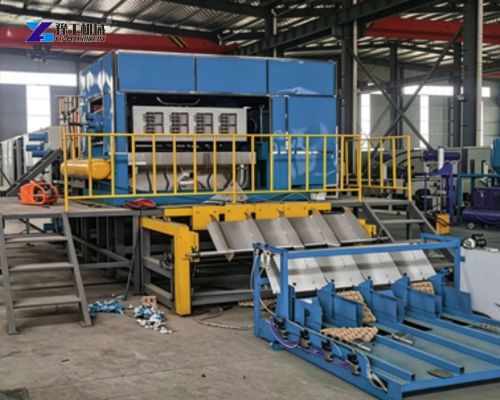
There is no single machine configuration that fits every buyer. Before purchasing, check these five points.
Match Capacity With Actual Orders
Estimate your daily and monthly demand first. Leave reasonable room for future growth, but avoid paying for unused capacity.
Check the Drying System
Ask how the machine handles wet trays after molding. Compare drying speed, energy source, floor space, and expected operating conditions.
Confirm Mold Compatibility
If you may produce 12-cell, 20-cell, or 30-cell trays in the future, confirm whether the equipment can support the required molds.
Consider Automation Level
Semi-automatic equipment may suit businesses with lower labor costs or smaller production targets. Automatic lines can be more attractive where labor costs are high or continuous production is required.
Ask About Technical Support
For overseas buyers, installation guidance, operator training, spare parts, and remote technical support are important parts of the purchase.
Q: What should I check before buying an egg tray molding machine?
Check the required capacity, raw material, tray size, drying method, automation level, mold compatibility, power requirements, factory space, installation support, and spare parts service before placing an order.
Why Choose YG as Your Paper Egg Tray Machine Manufacturer?
Buying from a manufacturer is different from buying a standalone machine from a trading company.
YG focuses on matching equipment configuration with the customer’s actual production requirements.
The project can be planned around factors such as target capacity, tray specifications, raw material, working hours, factory conditions, and automation requirements.
YG can also help customers evaluate the complete production process, including pulping, molding, drying, conveying, and stacking.
For overseas projects, practical support is equally important. Installation guidance, commissioning assistance, operation instructions, and spare parts planning can help reduce problems after the equipment arrives at the customer’s factory.
Before requesting a quotation, prepare your expected daily output and target tray size. If you can also provide information about your raw material and factory conditions, YG can recommend a more suitable configuration.
Get a Customized Egg Tray Production Line
FAQ About Paper Egg Tray Machines
1. What raw materials can be used?
Common options include waste newspaper, cardboard, office paper, and other suitable recycled paper. The exact material should be evaluated because fiber quality affects pulp performance and finished tray strength.
2. How many trays can the machine produce per hour?
Capacity varies by model and configuration. Factors include mold design, number of forming stations, production cycle, tray size, pulp condition, and drying arrangement.
3. Can one machine produce different egg tray sizes?
In many cases, different molds can be used to produce different tray designs. However, buyers should confirm mold dimensions and machine compatibility before ordering.
4. What is the difference between semi-automatic and automatic production?
Semi-automatic systems require more manual handling and can have a lower initial investment. Automatic systems reduce manual operations and are generally better suited to larger, continuous production.
5. What information should I provide when requesting a quotation?
Provide your target capacity, tray type, raw material, working hours, automation preference, available factory space, and destination country. These details allow YG to prepare a more useful equipment recommendation.
Conclusion
A paper egg tray machine is not simply a forming machine. It is part of a complete recycling and packaging production system.
For B2B buyers, the best choice depends on real production demand, raw material conditions, drying requirements, automation, and future expansion plans.
YG is a professional manufacturer that can provide equipment and production solutions for different egg tray projects. Tell YG your required capacity and product specifications, and let our team help you plan a practical solution.