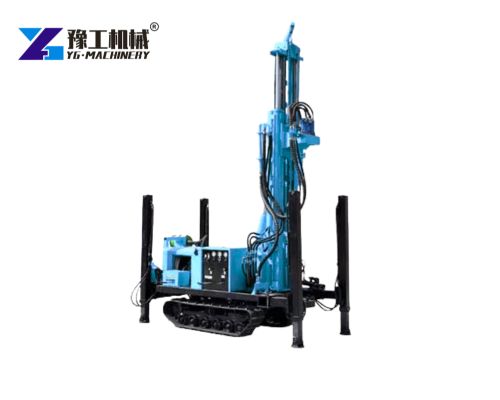
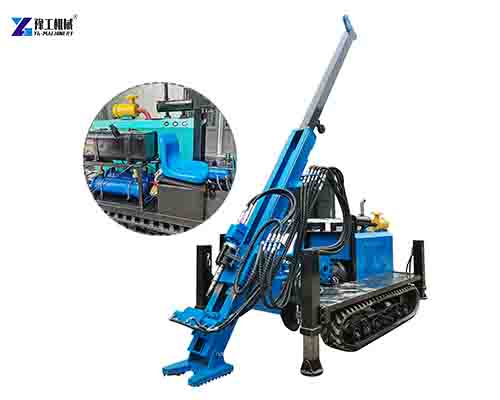
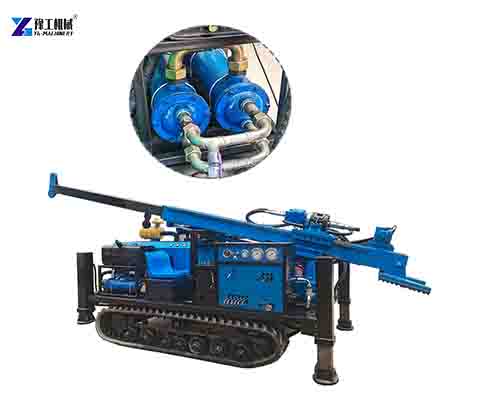
A hydraulic crawler drill is a self-propelled drilling machine that runs on tracked undercarriages and uses hydraulic power to operate. It is widely used in mining, quarrying, water well drilling, foundation engineering, and geotechnical exploration. Unlike pneumatic drills that rely heavily on compressed air, this machine uses a diesel engine and hydraulic pump system to generate power for rotation, feeding, lifting, and traveling. If you need efficient and reliable drilling in tough terrains, contact YG for more product information.
Contact YG For Your Project Needs
YG Hydraulic Crawler Drill Specifications-OEM Support
When choosing a hydraulic core drilling rig, you must look at the technical data. Different models have different capacities. Here is what you should check before buying:
| Model | YGX-400 | YGX-600 | YGX-800 | YGX-1000 |
| Drilling Depth(M) | 180-400-500 | 200-600-650 | 400-800-1000 | 500-1000-1100 |
| Rated pressure(MPA) | 21 | 21 | 25 | 28 |
| Rated Flow(L/min) | 168 | 192 | 260 | 300 |
| Heat Dissipation Mode | Air cooling+water cooling | |||
| Engine Brand | Yuchai | Yuchai | Yuchai | Cummins |
| Rated power/speed | 78kW/ 2400r/min | 92kW/ 2400r/min | 92kW/ 2400r/min | 154kW/2400r/min |
| Drilling Angle(°) | 0-90 | 45-90 | 45-90 | 45-90 |
| Lifting Force(T) | 12 | 16 | 24 | 30 |
| Feed Force(T) | 6 | 8 | 12 | 15 |
| Hydraulic Mud pump flow | 30-90(L/min) | 30-90(L/min) | 90-180(L/min) | 90-180(L/min) |
| Hydraulic Mud pump power | 4-7(MPA) | 4-7(MPA) | 4-7(MPA) | 4-7(MPA) |
| Dimension | 4000*1900*1800mm | 4000*2000*1800mm | 5500*2100*2000mm | 6000*2200*2400mm |
| Weight | 4.3T | 4.5/5.5T | 6.5T | 7.5T |
Contact YG For Your Project Needs
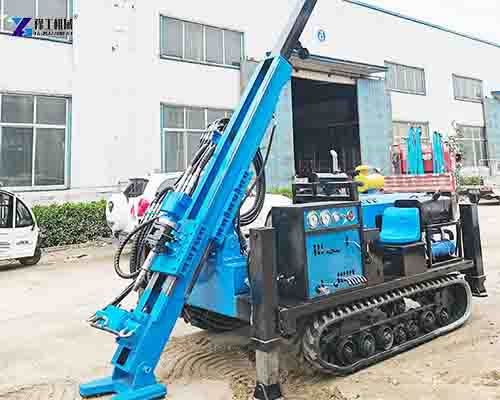
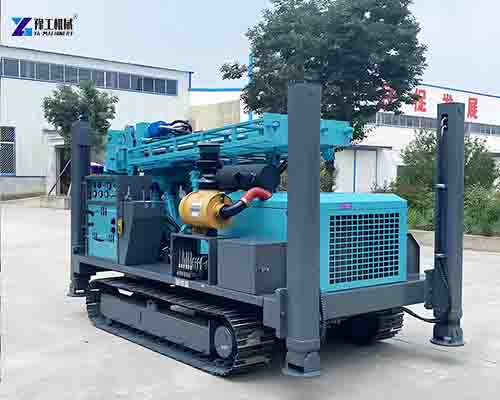
Hydraulic Vs. Pneumatic Crawler Drill: Key Advantages
If you are choosing between a pneumatic drill and a hydraulic crawler drill, here is what matters. Traditional pneumatic crawler drills use large amounts of compressed air to operate the hammer and the travel system. This requires a big air compressor and consumes high energy.
In contrast, a hydraulic crawler drill machine only uses compressed air for the down-the-hole hammer during drilling. All other functions are powered by hydraulics. According to industry data, this design saves about 40% to 50% in energy consumption compared to pneumatic rigs.
Other advantages include:
- Faster drilling speed in hard rock with f=6-20 hardness rating
- Lower noise levels on the job site
- Better fuel efficiency with diesel or electric motor options
- More precise control of rotation speed and feed force
- Reduced air compressor size, cutting equipment costs
For contractors working on large projects like open-pit mining, hydropower construction, or road building, the track mounted drill rig offers clear cost benefits over older pneumatic models.
Contact YG For Your Project Needs
4 Top Applications Of Hydraulic Crawler Drills
The hydraulic crawler drill is a versatile machine that handles many drilling jobs. Here are the main uses:
Mining and Quarrying
- Blast hole drilling in open-pit mines
- Rock fragmentation for quarry operations
- Drilling holes 90-165MM diameter up to 1100M depth
Water Well Drilling
- Drilling boreholes for water supply in rural and remote areas
- Works with HTW, NTW, and BTW drill rod sizes
Foundation Engineering
- Anchor drilling for slope support and retaining walls
- Micro-piling for building foundations
- Grouting stabilization for soil improvement
Geotechnical Surveys
- Mineral exploration and core sampling
- Geological mapping and site investigation
The track mounted drill rig is especially useful in areas with steep terrain. With a 0-90° climbing angle, you can move between drilling points without using cranes or trailers.
Contact YG For Your Project Needs
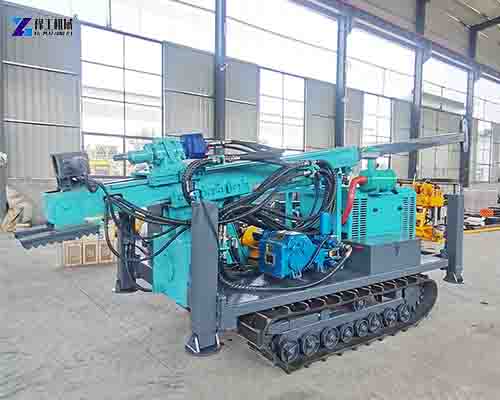
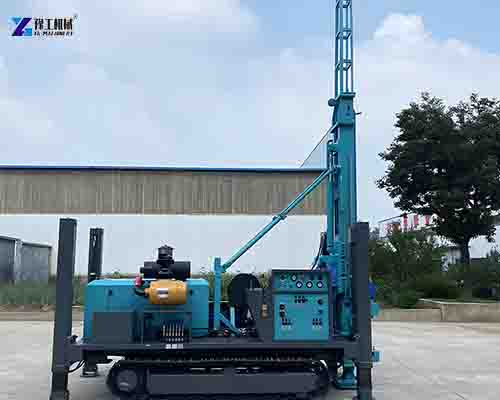
Understanding Drill Rod Sizes: HTW, BQ, NQ, HQ, PQ
When you buy a hydraulic crawler drill machine, you will see drill rod sizes like BQ, NQ, HQ, and PQ. These are standard wireline coring rod sizes used around the world. Here is what they mean:
| Rod Size | Outer Diameter (MM) | Inner Diameter (MM) | Typical Depth Capacity |
| BQ | 55.6 | 46.1 | 1200M |
| NQ | 71.0 | 60.2 | 1000M |
| HQ | 89.0 | 77.8 | 900M |
| PQ | 114.3 | 101.6 | 800M |
Source: Industry standard drill rod specifications
The HTW size is a thin-wall casing option. HTW has a 91.3MM outer diameter and 81.0MM inner diameter . Your choice depends on the project:
- BQ and NQ: Good for deeper, smaller diameter holes
- HQ and PQ: Used for larger core samples and shallower depths
- HTW and NTW: Thin-wall options for faster drilling in softer formations
Your drilling depth target will determine the rod size you need. For example, if you need 1200M depth, choose BQ rods. For 650M depth, HQ rods work well.
How To Select The Right Hydraulic Crawler Drill
Choosing the right hydraulic crawler drill for your work depends on several factors. Here is a simple guide:
1. Drilling Depth And Diameter
Check the maximum depth and hole diameter your project requires. Models range from 180M to 600M depth with 140-350MM hole diameter. For shallow blast holes under 50M, a lighter rig works. For deep water wells, choose a heavy-duty model.
2. Rock Hardness And Terrain
Hard rock (f=6-20) needs higher torque (3000-5000 N·M) and better feed force . Soft ground and steep slopes require strong crawler tracks with good ground clearance.
3. Power And Fuel Economy
Cummins engines are reliable and widely supported. Compare power ratings from 55KW to 194KW. Consider energy savings of 40-50% over pneumatic drills.
4. Mobility And Transport
Check the machine weight (4.5 to 12 tons) and transport dimensions . If you move between sites often, lighter models with smaller footprints are easier to transport.
5. Optional Features
Look for dust collectors (dry or wet), remote control, and operator seats for comfort and safety.
Contact YG For Your Project Needs
FAQ
Q1: What is the maximum drilling depth of a hydraulic crawler drill?
A: It depends on the model and rod size. Using BQ rods, some machines can reach 1100M depth. With HQ rods, depth is typically around 650-900M. For shallow blasting, 50M is common.
Q2: How much fuel does a hydraulic crawler drill consume?
A: Fuel consumption depends on engine power and workload. Compared to pneumatic drills, hydraulic models save 40-50% in energy costs because only the hammer needs compressed air. This means lower diesel or electricity bills.
Q3: Can the drill work on uneven or muddy ground?
A: Yes. The crawler tracks provide stable movement on soft, rocky, and sloped terrain. Most models can climb 24° to 45° slopes. Hydraulic outriggers also help stabilize the rig during drilling.
Q4: What maintenance does a hydraulic crawler drill need?
A: Regular maintenance includes checking hydraulic oil levels, cleaning filters, inspecting hoses, and greasing moving parts. The hydraulic system with air + water cooling prevents overheating during long operation. Follow the manufacturer’s service schedule for best results.
Q5: Can you customize the drill configuration?
A: Yes. YG offers options like dust collectors (dry or wet), different engine brands (Cummins, Yuchai), remote control systems, operator seats, and mud pumps for drilling fluid circulation. Contact us to discuss your project needs.