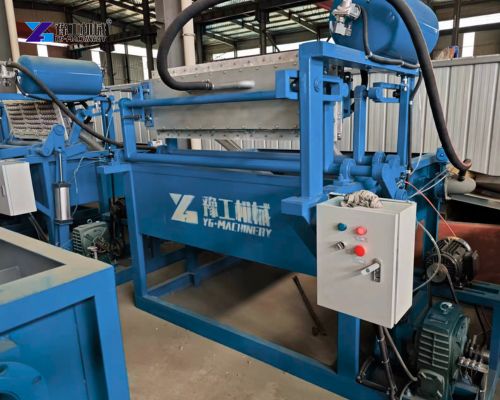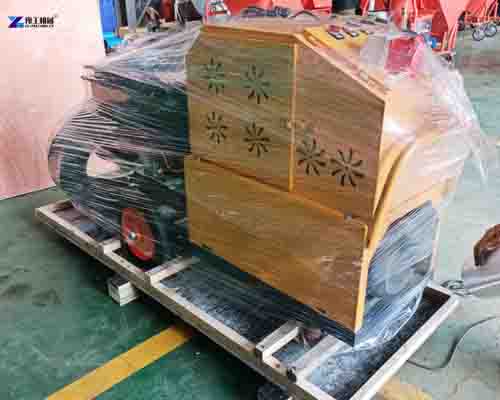
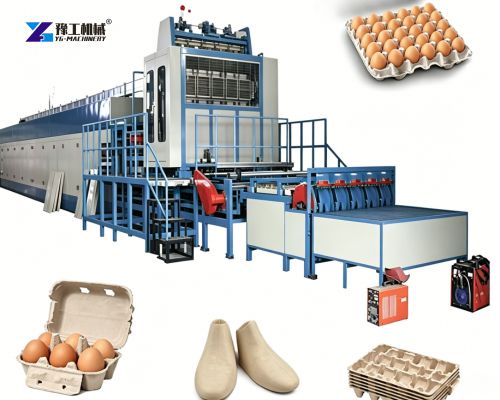
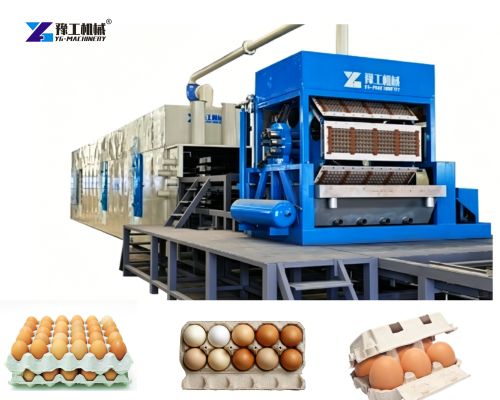
Fully automatic egg tray machine price depends on capacity, drying system, automation level, and production configuration. If you are searching for a fully automatic egg tray machine price, you are likely comparing options that range from $30,000 to $200,000. That gap is not random. It reflects real differences in output, automation depth, and long-term operating costs. YG manufactures these systems, and this article breaks down what actually drives the number you see on a quote. 【WhatsApp/WeChat/Skype/Phone】+86 159 3715 2330
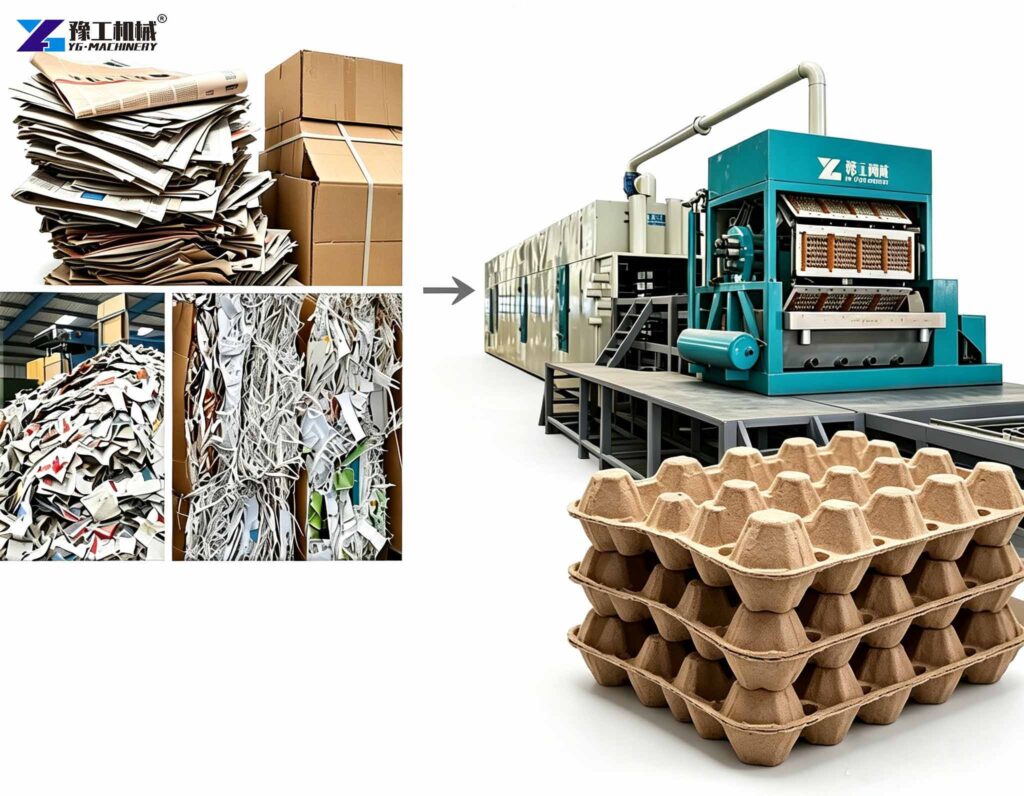
Quick context: a fully automatic egg tray machine turns waste paper into molded egg trays with minimal manual intervention. It handles pulping, forming, drying, and stacking in one continuous line. The price you pay depends on how much of that line is automated, how fast it runs, and what drying method you choose.
Get Fully Automatic Egg Tray Machine Price
YG Fully Automatic Egg Tray Machine Specifications
| Model | Capacity/H | Power/hour | Paper Consumption/H | Water Consumption/H |
| YG-1500 – 4X1 | 1500pcs/h | 38kw | 120kg | 240kg |
| YG-2500 – 3X4 | 2500pcs/h | 55kw | 200kg | 400kg |
| YG-3000 – 4X4 | 3000pcs/h | 60kw | 240kg | 480kg |
| YG-4000 – 4X8 | 4000pcs/h | 95kw | 320kg | 640kg |
| YG-5000 -5X8 | 5000pcs/h | 95kw | 400kg | 800kg |
| YG-7000 -6X8 | 7000pcs/h | 120kw | 480kg | 960kg |
Check main pulp‑molding product page:Paper Egg Tray Machine.
Get Fully Automatic Egg Tray Machine Price
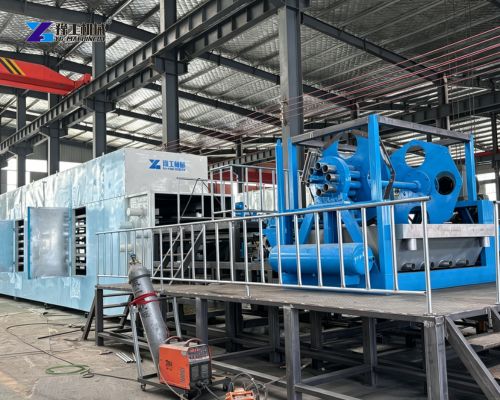
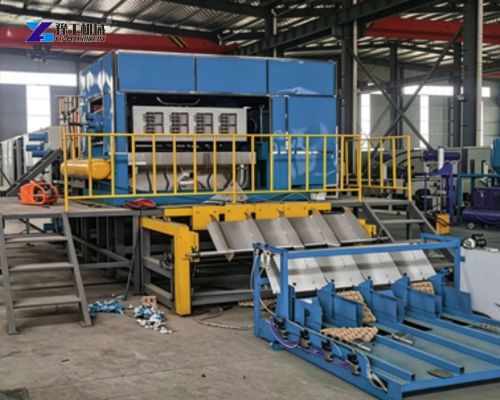
What Drives the Fully Automatic Egg Tray Machine Price
Most buyers start by comparing sticker prices. That is a mistake. The fully automatic egg tray machine price you are quoted is a bundle of decisions you have not made yet.
Here is what actually moves the number:
- Output capacity: A 1,000 pcs/hour machine and a 6,000 pcs/hour machine are not in the same category. Higher capacity means larger molds, stronger vacuum systems, and bigger drying tunnels.
- Drying method: Natural sun drying costs almost nothing upfront but requires space and climate. Metal drying lines add $20,000–$50,000 to the price but let you run year-round.
- Mold count and type: More molds mean more trays per cycle. Custom mold shapes for 6-egg, 12-egg, or 30-egg trays add tooling costs.
- Automation level: A “fully automatic” machine still varies. Some require manual mold changes. Others have quick-change systems and PLC controls that reduce labor by 15–20%.
Practical tip: Do not ask “how much for a fully automatic machine?” Ask “what is the price for 2,000 pcs/hour with metal drying?” That answer will be useful.
Get Fully Automatic Egg Tray Machine Price
Fully Automatic vs. Semi-Auto: The Cost Difference That Matters
Semi-automatic machines look cheaper. A small semi-auto unit might start around $4,000–$6,000. A fully automatic line often starts above $30,000.
But the purchase price is not the cost. Here is what happens after installation:
| Factor | Semi-Automatic | Fully Automatic |
| Labor per shift | 4–8 workers | 1–3 workers |
| Daily output (8 hrs) | 6,000–12,000 trays | 16,000–48,000 trays |
| Labor cost per year* | $20,000–$50,000 | $5,000–$15,000 |
| Downtime risk | Higher (manual transfer) | Lower (integrated line) |
*Estimates based on typical developing-market labor rates.
The math is simple. A fully automatic machine costs more upfront but often pays back the difference within 12–18 months through labor savings alone. After that, the gap becomes profit.
The data supports this: machines with full automation generate ROI roughly 40% faster than semi-auto alternatives despite higher initial cost.

Key Components Affecting Fully Automatic Egg Tray Making Machine Cost
When you request a quote for a fully automatic egg tray making machine, the supplier is pricing five subsystems. Understanding these helps you negotiate intelligently.
| Component | What It Does | Cost Impact |
| Pulping system | Turns waste paper + water into uniform pulp | $3,000–$8,000 |
| Forming machine | Vacuum-forms trays on rotary molds | $15,000–$80,000 |
| Drying line | Removes moisture (metal/brick/natural) | $10,000–$60,000 |
| Stacking unit | Counts and stacks finished trays | $2,000–$6,000 |
| Control panel | PLC + HMI for automated operation | $1,500–$5,000 |
The forming machine is the heart of the line. Its mold count determines your ceiling output. A 3-mold machine tops out around 1,000 pcs/hour. A 48-mold machine can hit 6,000–6,500 pcs/hour.
A note on drying: If your location gets 300+ sunny days a year, natural drying is a legitimate way to cut initial cost by 30–40%. But it limits you to about 1,500 pcs/hour and exposes you to weather risk. For consistent commercial production, metal drying is the realistic choice.
Get Fully Automatic Egg Tray Machine Price
How to Get an Accurate Fully Automatic Egg Tray Machine Price
Suppliers cannot quote accurately without specific inputs. If you send a vague inquiry, you will get a vague number. Here is what to include:
- Target output: trays per hour or per day
- Tray type: 30-egg standard, 12-egg carton, fruit tray, or custom
- Drying preference: natural, brick kiln, or metal line
- Power supply: 220V or 380V, single or three-phase
- Local labor cost: helps calculate ROI for you
- Destination port: freight is often 10–15% of total cost
A serious manufacturer will respond with a configuration, not just a number. If a supplier quotes $8,000 for a “fully automatic 5,000 pcs/hour machine,” be suspicious. That price does not match the component costs.
What to ask on the call:
- “What is included in this price, and what is optional?”
- “What is the warranty period on molds and vacuum pumps?”
- “Can you share a reference installation in my region?”
Get Fully Automatic Egg Tray Machine Price
FAQ
Q: What is the average price of a fully automatic egg tray machine?
A: Entry-level full-auto lines start around $30,000–$50,000 for 1,000–2,000 pcs/hour. High-capacity systems (6,000+ pcs/hour) with metal drying run $120,000–$200,000.
Q: How long does installation take?
A: Forming machine setup takes 3–5 days. Full line commissioning with drying system takes 10–15 days. Training is usually included.
Q: What raw materials can I use?
A: Waste paper, cardboard, newspaper, and office paper all work. Bamboo fiber and bagasse are options for premium eco-friendly trays.