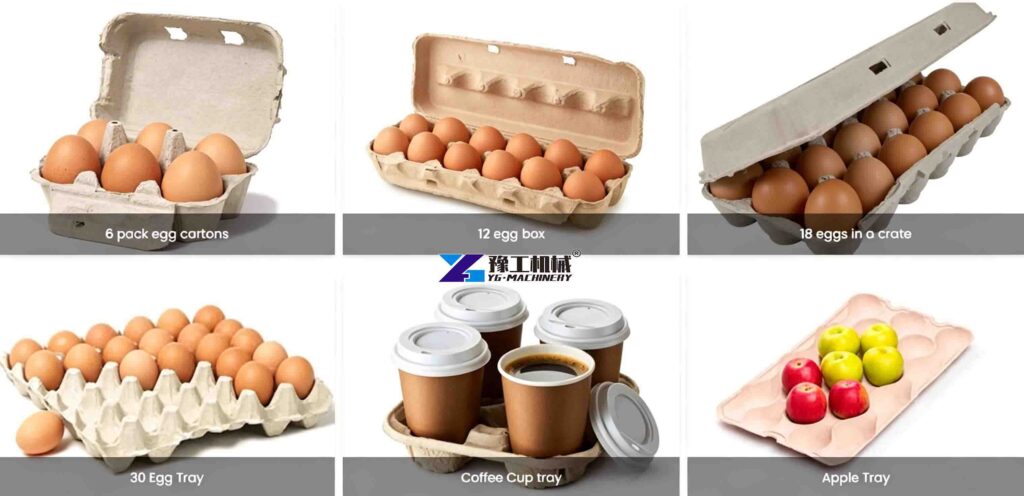
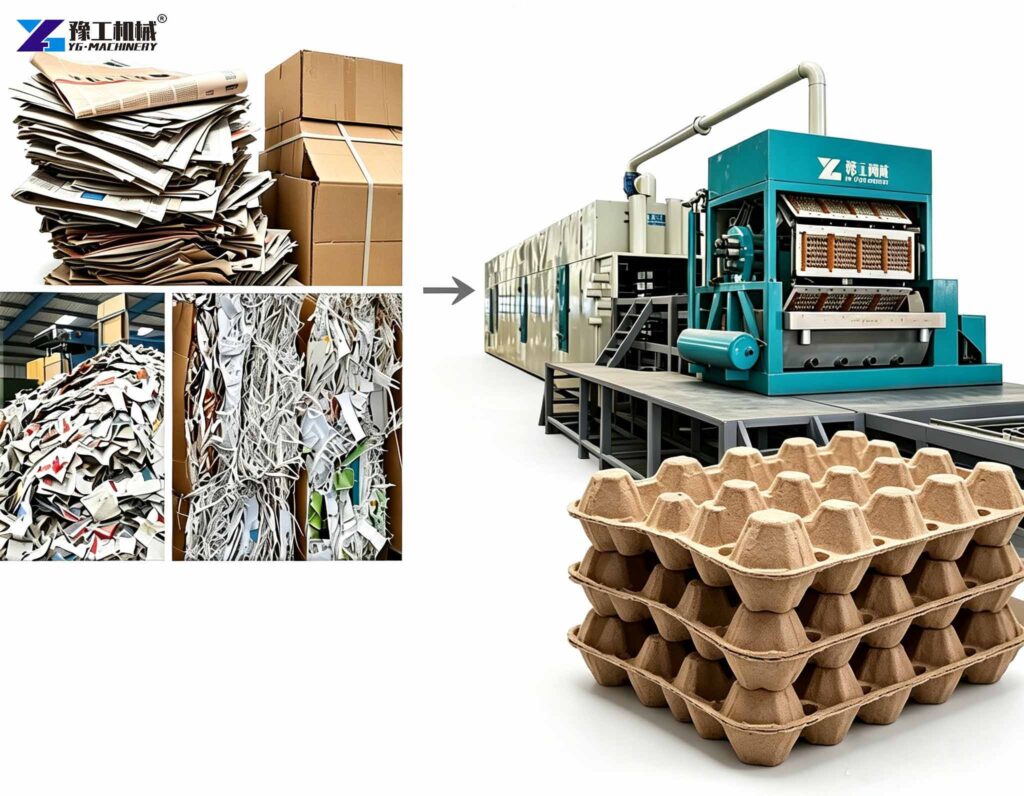
An egg tray manufacturing business produces protective packaging for eggs using waste paper as raw material. The process turns recycled paper into molded pulp trays that hold eggs safely during transport and storage. This is a green business because it reuses waste materials and produces biodegradable products.
The global egg tray market was valued at $13.5 billion in 2024 and is projected to reach $16.5 billion by 2030, growing at 3.5% annually . This growth is driven by rising egg consumption worldwide and increasing demand for sustainable packaging.
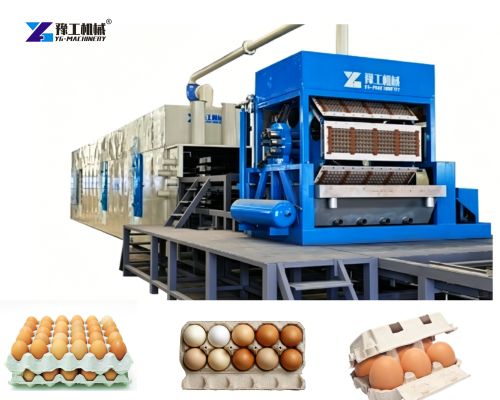
Starting an egg tray manufacturing business requires a paper egg tray machine, raw materials (waste paper), water, and a drying area. The machine molds wet pulp into tray shapes, which are then dried and packed for sale.
Step 1: Understand the Market and Customers
Before investing in equipment, know who will buy your egg trays. The main customer groups are:
- Commercial Poultry Farms – They need trays to transport eggs from farm to packers. This is the largest volume market .
- Egg Packers and Distributors – They buy trays in bulk for repackaging eggs for retail.
- Supermarkets and Retailers – They need attractive, branded trays for store shelves.
- Foodservice and Bakeries – They use trays for back-of-house storage and transport.
The Asia-Pacific region, led by China and India, holds the largest market share due to population size and poultry farming. North America and Europe prioritize quality and sustainability. Africa and Latin America are emerging growth zones.
Step 2: Choose the Right Paper Egg Tray Machine
The paper egg tray machine is the heart of your production line. Machines are categorized by capacity (pieces per hour) and number of mold faces. Here is a comparison of YG common models :
| Model | YG-1000-3X1 | YG-1500-4X1 | YG-2500-3X4 | YG-3000-4X4 | YG-4000-4X8 | YG-5000-5X8 | YG-7000-6X8 |
| Capacity/hour | 1000pcs/h | 1500pcs/h | 2500pcs/h | 3000pcs/h | 4000pcs/h | 5000pcs/h | 7000pcs/h |
| Power/hour | 38kw | 38kw | 55kw | 60kw | 95kw | 95kw | 120kw |
| Voltage | 380V50Hz | 380V50Hz | 380V50Hz | 380V50Hz | 380V50Hz | 380V50Hz | 380V50Hz |
| Weight | 2500kg | 3000kg | 4000kg | 4800kg | 7000kg | 8000kg | 10000kg |
| Dimensions (main machine) | 2600*2200*1900mm | 2800*2200*1900mm | 2900*1800*1800mm | 3250*1800*1800mm | 3250*2300*2500mm | 3700*2300*2500mm | 3200*2300*2500mm |
| Paper consumption/hour | 80kg | 120kg | 200kg | 240kg | 320kg | 400kg | 480kg |
| Water consumption/hour | 160kg | 240kg | 400kg | 480kg | 640kg | 800kg | 960kg |
| Drying | Dry naturally | Dry naturally | Multi-layer drying | Multi-layer drying | Multi-layer drying | Multi-layer drying | Multi-layer drying |
Key selection criteria:
- Capacity Needs – If you plan to sell locally, 1000-2000 pcs/h may be enough. For regional distribution, choose 4000+ pcs/h.
- Automation Level – Fully automatic lines need fewer workers but cost more upfront. Semi-automatic machines require more labor but have lower initial investment.
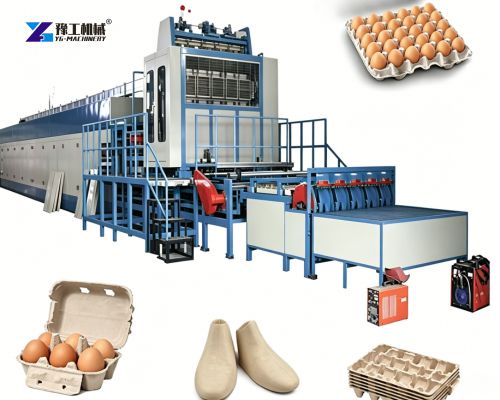
- Mold Flexibility – Good machines allow you to change molds to produce different products: egg trays, egg cartons, fruit trays, cup holders, and industrial packaging.
Step 3: Understand the Production Process
The egg crate making machine operates through three main stages :
1. Pulping
Waste paper (newspapers, cardboard, office paper) is mixed with water in a hydrapulper. The mixture becomes a slurry. For best results, use 65% chipboard and 35% newsprint waste paper, with 4% pulp consistency .
2. Molding
The slurry is pumped to the forming machine. A mold dips into the pulp vat. Vacuum suction pulls the pulp onto the mold surface, forming the tray shape. The wet tray is then transferred to the next stage.
3. Drying
Wet trays contain about 75% moisture. They must be dried to about 10% moisture. Drying methods include :
- Natural Sun Drying – Lowest cost but slowest. Takes 1-2 days. Best for small production.
- Brick Kiln Drying – Moderate cost. Uses wood, coal, or gas as fuel.
- Multi-layer Metal Drying Line – Fastest and most consistent. Higher initial cost but lower labor cost.
The dried trays are then stacked, packed, and ready for sale.

Step 4: Plan Your Investment and Costs
The egg tray manufacturing business investment varies widely based on machine size and drying method.
Equipment Cost Range:
- Small manual machine: $1,000 – $3,000 (basic setup)
- Medium automatic machine: $10,000 – $20,000
- Large industrial line: $25,000 – $50,000+
Additional Costs to Consider:
- Raw materials: Waste paper is cheap and widely available
- Electricity: Varies by machine power (32-150 kW)
- Water: Need a reliable water source
- Labor: 3-6 workers depending on automation level
- Factory space: Machine footprint ranges from 2.6m × 2.2m for small units to larger for industrial lines
Production Cost Per Tray:
With efficient operation, each egg tray can cost as little as $0.01-0.03 to produce . Selling prices vary by market but typically range from $0.05-0.15 per tray. This gives a healthy margin for most producers.
Step 5: Select Raw Materials
Raw materials are easy to find and low cost. Here are the common sources:
- Waste Paper Types – Cardboard boxes, newspapers, magazines, office paper, paper mill waste
- Alternative Fibers – Bagasse (sugar cane waste), straw, bamboo, palm fiber
- Water – Clean water for pulping and washing
Key tip: The quality of your trays depends on the pulp quality. Use a fabric mesh with hole size ≤ 0.6 mm for the mold. This ensures smooth tray surfaces and good detail.
Step 6: Consider Drying Method Options
Drying is the most energy-intensive part of production. Your choice affects both cost and quality.
Comparison of Drying Methods
| Method | Cost | Speed | Best For |
| Natural sun drying | Free (space only) | 1-2 days | Small production, sunny climates |
| Brick kiln (wood/coal) | Low | 4-8 hours | Medium production, rural areas |
| Trolley drying | Medium | 2-4 hours | Medium production, consistent quality |
| Multi-layer metal drying | High | 30-60 minutes | Large production, industrial scale |
Fuel options for kiln drying :
- Natural gas: 18-22 m³/hour
- LPG: 7-8 m³/hour
- Diesel: 16-20 kg/hour
- Wood: 70-80 kg/hour
- Coal: 50-60 kg/hour
Step 7: Quality Control and Product Range
A good paper egg tray machine can produce more than just egg trays. By changing molds, you can make:
- Egg Cartons – Closed containers for 6, 12, or 18 eggs
- Fruit Trays – For apples, pears, and other fruits
- Wine Trays – Protective packaging for bottles
- Industrial Trays – For electronics, medical devices, and mechanical parts
- Seedling/Nursery Trays – For plant propagation
Quality indicators for egg trays:
- Dry weight: ~86g for a 30-cell tray
- Cell diameter: 35mm (fits standard eggs)
- Cell depth: 25mm (adequate protection)
- Caliper (thickness): 1.35mm
The trays produced should protect eggs during transport. Studies show good paper egg trays can reduce egg breakage from 8-10% to about 2%.
Frequently Asked Questions
1. How much does it cost to start an egg tray manufacturing business?
Costs range from $1,000 for a small manual setup to $50,000+ for an industrial automatic line. Medium-scale machines cost $10,000-$20,000, plus installation and drying system .
2. What raw materials does an egg tray manufacturing business need?
Waste paper (cardboard, newspapers, office paper) and water are the main materials. You can also use agricultural waste like bagasse or straw. Paper consumption for a 1000 pcs/h machine is about 80-120 kg/hour .
3. How do I choose the right paper egg tray machine capacity?
Consider your target market. Local sales need 1000-2000 pcs/h. Regional distribution needs 3000-5000 pcs/h. Large commercial operations need 6000-8000 pcs/h. Also consider drying method capacity .
4. What is the difference between natural drying and machine drying?
Natural drying uses sunlight. It is free but slow and weather-dependent. Machine drying (kiln or metal drying line) is faster and consistent but costs more in equipment and energy. Choose based on your production volume and local climate .
5. Can one machine produce different products?
Yes. By changing molds, the same egg crate making machine can produce egg trays, egg cartons, fruit trays, cup holders, and industrial packaging. This flexibility helps you serve multiple markets.