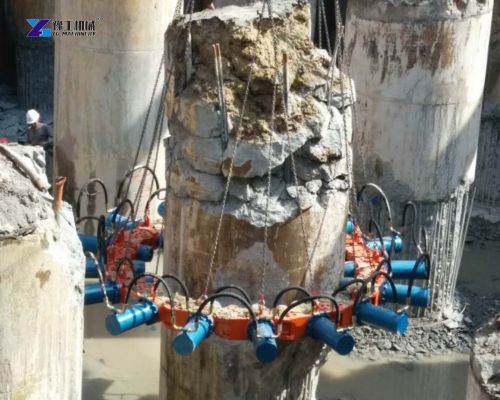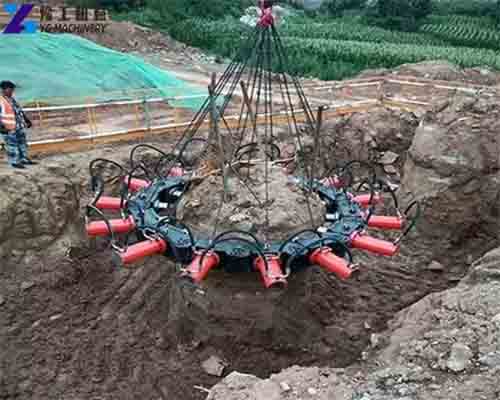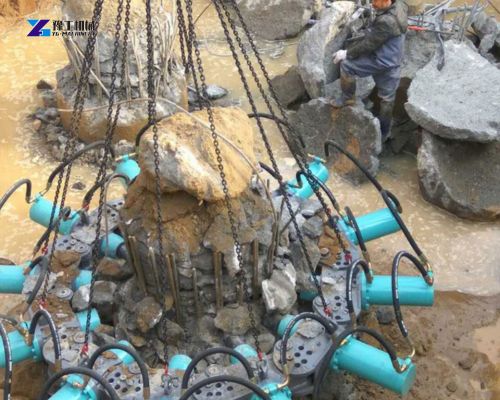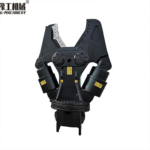
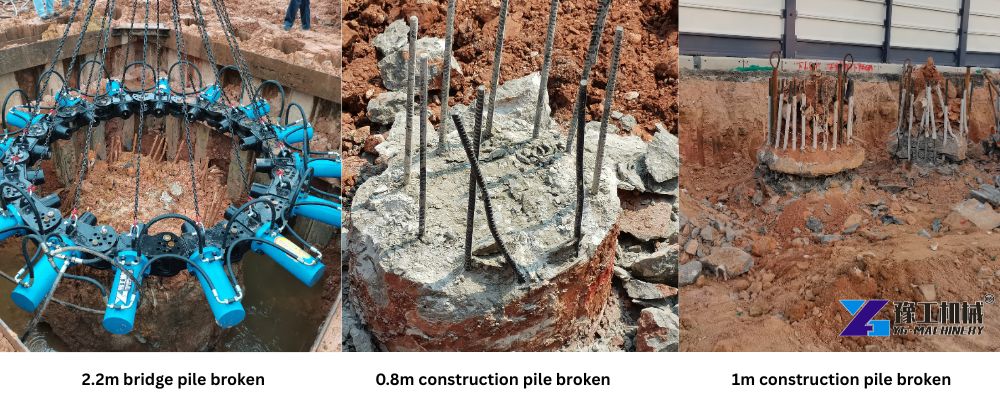
A pile breaker is specialized construction equipment that removes excess concrete from pile heads using synchronized hydraulic pressure. It typically handles diameters from 400mm up to 2500mm, replacing manual jackhammers with a static crushing action that preserves internal rebar. If you are sourcing for infrastructure, bridge, or high-rise foundation projects, this guide will help you match the right hydraulic pile breaker to your job site specifications.
📞 Need help selecting the right model? Contact YG for expert advice →
YG Concrete Pile Breaker Models
To ensure optimal structural integrity and precise matching with your carrier fleet, please refer to our official production data and modular configuration matrix below:
| Module Number | PCS | 4 | 8 | 9 | 10 | 11 | 12 | 13 | 14 | 15 | 16 | 17 | 18 |
| Combination of the total weight | KG | 1600 | 2640 | 2970 | 3300 | 3630 | 3960 | 4290 | 4620 | 4950 | 5280 | 5610 | 5940 |
| Pile diameter range | mm | 400-600 | 600-800 | 800-1000 | 1000-1150 | 1150-1300 | 1300-1500 | 1500-1650 | 1650-1800 | 1800-1970 | 1970-2200 | 2200-2360 | 2360-2500 |
| Hydraulic excavator | T | 20T-30T | 30T-40T | Hydraulic system/pump station | |||||||||
| Max.Thrust | 300KN | Max.Cylinder required | 20L/min | Machinery Tonnage | ≥20T | Location pinΦ35 | |||||||
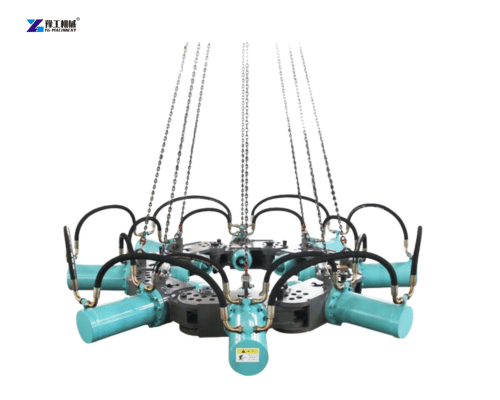
Why a Hydraulic Pile Breaker Outperforms Manual Methods
Let’s be honest. Breaking pile heads manually with jackhammers is slow, inconsistent, and risky. Here is what the data shows:
| Factor | Hydraulic Pile Breaker | Manual Breaking |
| Output per 8-hour shift | Up to 200–300 piles | 5–10 piles |
| Rebar damage risk | Low (static crushing) | High (impact damage) |
| Labor required | 1–2 operators | 3–5 workers |
| Cutting quality | Uniform, clean surface | Irregular, needs rework |
A modular concrete pile cutter runs 15 to 20 times faster than manual methods while keeping the internal rebar cage intact . That translates directly to lower project costs and shorter timelines.
What to Check Before Buying a Pile Breaker
Pile Diameter and Shape Match
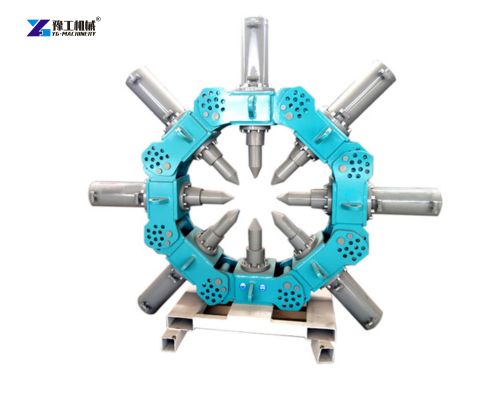
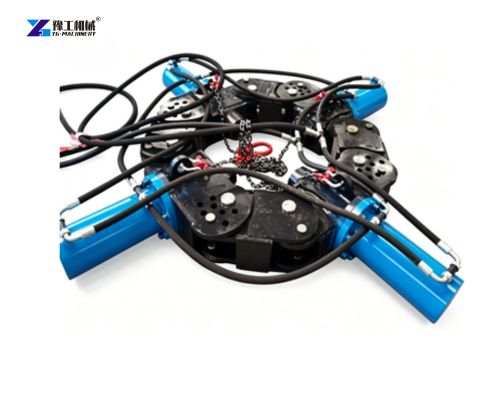
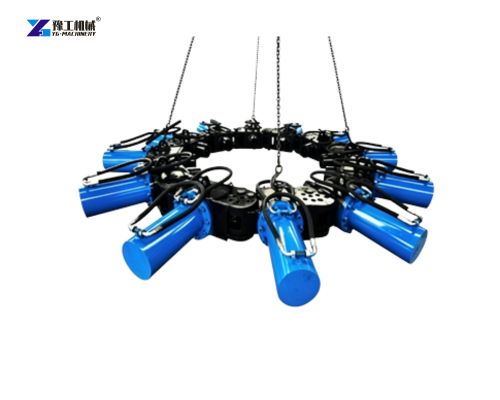
This is your starting point. Round piles use modular interlocking designs that can be adjusted by adding or removing modules. Square piles require a fixed frame with cylinders applying force from four sides.
Here is a typical module-to-diameter reference :
| Module Count | Pile Diameter Range (Round) | Total Weight |
| 8 | 600–800 mm | ~2,640 kg |
| 10 | 1000–1150 mm | ~3,300 kg |
| 12 | 1300–1500 mm | ~3,960 kg |
| 15 | 1800–2000 mm | ~4,950 kg |
| 18 | 2360–2500 mm | ~5,940 kg |
Important: Using too many or too few modules causes uneven pressure and bends the rebar. Always check the manufacturer’s configuration chart .
📞 Unsure about your pile specs? Send your project details to YG →
Excavator Compatibility (The Hard Conditions)
Many buyers make this mistake. They choose a hydraulic pile breaker first and then discover their excavator cannot handle it. Check these three conditions before you spend any money.
Hydraulic Flow
Each module requires about 20 L/min. A 12-module pile breaker needs around 240 L/min to work properly . If your excavator cannot deliver sufficient flow, the pile cutter will move slowly and fail to generate enough crushing force.
Most 20-ton excavators produce 120–160 L/min from a single pump. For larger pile crusher setups, you will need a dual pump confluence .
Working Pressure
Pressure gives you force. A hydraulic pile breaker typically needs at least 280 bar to crush concrete effectively. The maximum cylinder pressure is usually around 300 bar, delivering about 300 kN of thrust per cylinder . Check your excavator’s auxiliary port pressure before ordering.
Tonnage Match
The combined weight of the hydraulic pile breaker should be roughly 15–20% of your excavator’s operating weight for stable performance . For example, a 4,000 kg pile breaker needs at least a 20–30 ton excavator.
Concrete Strength and Cutting Force
Concrete grade matters more than most buyers think. C70 grade concrete requires significantly more crushing force than standard mixes . The pile breaker must generate enough pressure to split the concrete without damaging the embedded reinforcement.
Look for chisel tips designed to glide over rebar rather than cut through it. A rounded tip design efficiently splits concrete while protecting the steel structure . Some contractors also wrap rebar ends with plastic when the cage exceeds elevation, reducing grip force and making fragment removal easier.
Round vs Square Pile Breaker: Which One Fits?
| Feature | Round Pile Breaker | Square Pile Breaker |
| Best for | Cast-in-place bored piles | Precast square piles |
| Adjustment | Modular, add/remove links | Fixed frame |
| Diameter range | 300–2500 mm | 300–600 mm sides |
| Pressure distribution | Inward from all sides | Four-way equal forc |
Round pile breakers are more versatile and widely used globally . Square pile breakers give more uniform edge results for precast foundation projects .
📞 Tell us your pile type and size. YG will recommend the right model →
YG Pile Breaker Product Line and Applications
At YG, we manufacture a comprehensive range of pile breakers designed to handle diverse site conditions. Our product line is divided into three main series, each tailored for specific construction scenarios.
YG-R Series Round Hydraulic Pile Breakers
This is our flagship line. It features a modular ring design that allows you to expand or shrink the internal diameter by adding or removing cylinder modules. Best for: Large-scale infrastructure projects like expressways, railway viaducts, and port foundations where bored piles are standard.
Typical applications:
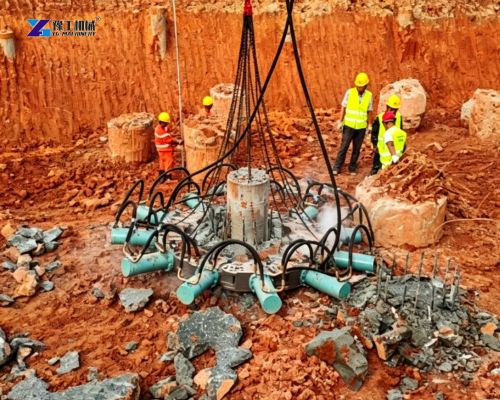
- Highway bridge piers: Handles pile diameters from 1000mm to 2000mm with precise vertical cuts.
- Offshore wind turbine foundations: Used in marine environments with corrosion-resistant coating options.
- High-rise building core columns: Ensures perfectly level pile tops for steel column splicing.
YG-S Series Square Concrete Pile Cutters
Our square series uses a rigid four-point clamping frame. The hydraulic cylinders act simultaneously on all four flat faces. Best for: Precast concrete pile driving projects and urban underground parking structures.
Typical applications:
- Residential building foundations: Used with 350mm to 500mm precast square piles in soft soil areas.
- Subway station support piles: Provides straight cutting edges for easy formwork installation.
- Factory floor pile heads: Leaves a smooth, even surface that is ready for grade beam casting.
YG-M Mini Pile Breaker (Compact Series)
Designed for small excavators (5 to 15 tons), this series uses fewer modules and a lighter frame. Best for: Tight urban sites, renovation projects, and small-diameter micro-piles.
Typical applications:
- Utility trench pile heads: Cuts 300mm to 600mm piles for pipeline supports.
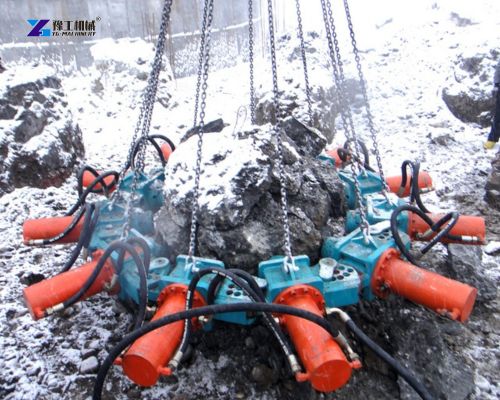
- Slope protection piles: Works efficiently on mountainous terrain with limited access.
- Temporary foundation piles: Used in bridge repair sites where quick removal is critical.
YG offers full customization including custom paint, logo engraving, and specific chisel tip profiles for reinforced concrete or prestressed piles. All units undergo a rigorous 10,000-cycle fatigue test before shipment.
📞 Not sure which series fits your excavator? Send your project parameters to YG →
FAQ
Q1: How many piles can a hydraulic pile breaker cut per day?
Smaller models (e.g., 250–500 mm diameter) can cut 100–120 piles in an 8-hour shift. Larger diameter models typically process 20–50 piles per shift, depending on concrete strength and pile size.
Q2: Does a pile breaker damage the reinforcement bars?
No. The static crushing action applies pressure only to the concrete. The chisel tips are designed to glide over rebar rather than cut it, preserving the steel structure.
Q3: What size excavator do I need for a pile breaker?
A 20–30 ton excavator handles most medium-diameter round pile breakers. Larger diameters (over 1500 mm) may require 35–50 ton machines or dedicated hydraulic power packs.
Q4: Can a round pile breaker also cut square piles?
Generally no. Round pile breakers use circular modular frames. Square pile breakers have fixed four-way frames designed for flat surfaces. Some hybrid designs exist, but they are less common.