

GRC and GFRC producers across Australia face tight tolerances on panel thickness, fibre distribution, and surface finish. Hand mixing and manual spraying create inconsistent batches, visible surface variation, and rejection rates that eat into margins. Large industrial spraying setups cost too much for small and mid-size precast workshops. Many Australian producers need a compact machine that delivers repeatable slurry and fibre ratios without constant supervision. YG Machinery’s GRC GFRC Spray Machine solves these problems with PLC-controlled pumping and metered fibre delivery. The YG-GRC200 and YG-GRC300 models offer slurry outputs from 10 to 20 kg/min. If your workshop is evaluating GRC equipment, our team can walk you through the model differences. 【WhatsApp/WeChat/Skype/Phone】+86 159 3715 2330
Request GRC GFRC Spray Machine Pricing
GRC GFRC Spray Machine Parameters
| Parameter | YG-GRC200 | YG-GRC300 |
| Slurry Output | 10-15 kg/min | 12-20 kg/min |
| Fibre Output | 500-800 g/min | 600-1000 g/min |
| Motor Power | 2.2 kW | 4.0 kW |
| Pump Type | Peristaltic Pump | Progressive Cavity Pump |
| Hopper Capacity | 80 kg | 150 kg |
| Machine Weight | 180 kg | 420 kg |
| Dimensions (LWH) | 1000*600*1200 mm | 1260*1460*1500 mm |
| Power Supply | 380V, 3-phase | 380V, 3-phase |
| Control System | PLC + Touchscreen | PLC + Touchscreen |
| Spray Gun Type | Concentric Spray Gun | Concentric + Facing Coat Gun |
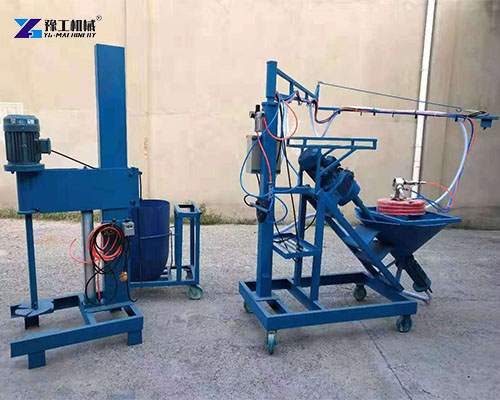

Case Study One: Australia – GRC Facade Panel Production
Project Background and Site Conditions
A precast producer in Australia manufactures GRC facade panels for commercial refurbishment projects. The workshop runs two production lines and supplies roughly 2,000 square meters of panels annually. Most panels are 12 to 18mm thick with sharp arris edges and a brick-textured face. Four operators work each shift, and the company has been producing GRC for six years.
Operational Constraints and Technical Barriers
The producer used manual mixing and hand spraying. Fibre distribution varied between batches, and finished panels showed visible surface differences that clients rejected. Rejection rates reached 12%, mostly from thickness variation and fibre clumping. The client needed a GRC shotcrete machine that could hold a steady fibre-to-slurry ratio across a full shift and reduce material waste without slowing the line.
Equipment Selection and On-Site Support
YG supplied the YG-GRC300 GRC GFRC Spray Machine with 12-20 kg/min slurry output and 600-1000 g/min fibre output. The progressive cavity pump handles dense GRC mixes without clogging. The PLC touchscreen lets operators store recipe settings for each panel type, so changeovers no longer require manual recalibration. The 150 kg hopper supports 30 to 40 minutes of continuous spraying. The concentric plus facing coat gun delivers even coverage on vertical moulds. YG’s technician spent a day on-site reviewing mix ratios and gun distance.
Performance Outcomes and Client Verification
“The YG-GRC300 cut our rejection rate from 12% to under 3% within the first month. The PLC recipes mean we switch between panel designs without manual adjustments. Our operators learned the touchscreen in one day.” Material waste dropped by 20% and daily output rose 15%. The producer is now planning a second line and asked us to quote a matching unit.
Get GRC GFRC Spray Machine Quote

Case Study Two: Australia – Architectural GFRC Restoration Work
Project Background and Site Conditions
A restoration contractor in Australia specializes in repairing heritage facades with GFRC elements. The company handles 15 to 20 projects per year, mostly cornices, window surrounds, and decorative banding on buildings from the 1920s to 1960s. Crews work on live sites where access is tight and power availability varies.
Operational Constraints and Technical Barriers
Access to heritage buildings often rules out bulky equipment. The contractor needed a GFRC sprayer for sale that could pass through standard doorways and operate from a single-phase site supply through a step-up transformer. Matching the original GFRC density on repair sections required precise fibre output control. The crew also needed fast switching between repair mortar and facing coat applications without a full teardown.
Equipment Selection and On-Site Support
YG recommended the YG-GRC200 GRC GFRC spray machine with 10-15 kg/min slurry output and 500-800 g/min fibre output. At 180 kg and 1000*600*1200mm, one worker can move it through narrow openings with a pallet jack. The peristaltic pump handles small batches without priming issues. The concentric spray gun gives controlled output for detailed profiles. The PLC stores multiple recipe settings, so the crew switches between repair mortar and facing coat in minutes.
Performance Outcomes and Client Verification
“The YG-GRC200 fits through doorways and works in tight spaces. The fibre output control lets us match the original GFRC texture on every project. We completed a 200 square meter restoration in 8 days instead of the planned 12.” The contractor confirmed the machine paid for itself within six months. If you run similar heritage work and want to compare notes on mix designs, our technical team is happy to help.

Why Australian Producers Choose the YG GRC GFRC Spray Machine
Consistent fibre-to-slurry ratio. The PLC controls both pump speed and fibre feeder rate. Operators set a ratio once and the machine holds it, batch after batch.
Two pump options for different mixes. The YG-GRC200 uses a peristaltic pump for small batches and quick cleanup. The YG-GRC300 uses a progressive cavity pump for dense, continuous production.
Compact enough for real sites. At 180 kg, the YG-GRC200 moves through standard doorways. The YG-GRC300 fits a small workshop footprint without a dedicated spray booth.
Recipe storage cuts changeover time. Switching between panel types, repair mortars, and facing coats takes minutes instead of a full recalibration.
Spray gun matched to the job. The concentric gun handles detailed profiles. The facing coat gun delivers smooth finishes on flat panels.
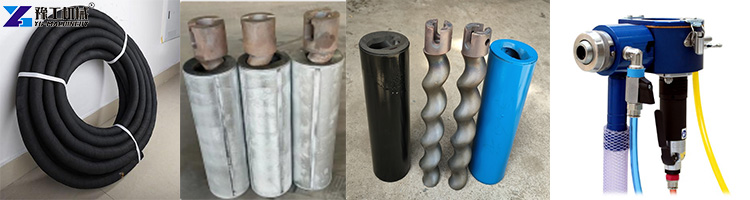
Serviceable in Australia. YG stocks wear parts including pump tubes, rotors, stators, and spray gun nozzles. Share your production plan and we will recommend a spare parts kit sized to your output.
GRC Shotcrete Machine Applications Beyond Facade Panels
Decorative mouldings and cornices. Spray GRC into intricate moulds for ornamental features. The concentric gun reaches detailed profiles without overspray.
Building restoration. Match original GFRC textures on heritage facades. PLC recipes allow precise fibre-to-slurry adjustments.
Landscape elements. Manufacture GRC planters, benches, and water features in small and large production runs.
Prefabricated wall cladding. Produce thin GRC cladding panels with uniform fibre distribution. The progressive cavity pump handles high-density mixes.
Column covers and pillars. Spray GRC onto cylindrical moulds for structural and decorative columns. The facing coat gun delivers smooth surface finishes.
GRC GFRC Spray Machine for Sale – YG Machinery
YG Machinery offers reliable GRC GFRC spray machine for sale for Australian precast plants, restoration contractors, and architectural workshops. Our GRC shotcrete machine series provides YG-GRC200 and YG-GRC300 models with 10-20 kg/min slurry output, 500-1000 g/min fibre output, and PLC touchscreen control. Our GFRC sprayer for sale lineup covers small-batch restoration through continuous panel production. Contact YG Machinery with your production volume and panel size requirements. Our team provides transparent pricing, model selection support, and global shipping.
Frequently Asked Questions of GRC Shotcrete Machine
Q1: What is the difference between the YG-GRC200 and YG-GRC300?
The YG-GRC200 suits small workshops and on-site restoration with 10-15 kg/min slurry output and 180 kg weight. The YG-GRC300 handles higher production volumes with 12-20 kg/min output, a 150 kg hopper, and 420 kg weight.
Q2: What fibre types can the GRC GFRC Spray Machine handle?
Both models handle chopped glassfibre strands from 12mm to 50mm length. Fibre output adjusts from 500 to 1000 g/min depending on model.
Q3: Does the GRC shotcrete machine require special operator training?
The PLC touchscreen uses simple menu navigation. Most operators learn basic operation in 2 to 4 hours. YG provides operation videos and online technical support.
Q4: What maintenance does the GFRC sprayer for sale need?
Clean the pump and hopper after each shift. Check peristaltic pump tubes for wear every 200 hours. The progressive cavity pump on the YG-GRC300 requires rotor and stator inspection every 500 hours.
Q5: Can the GRC GFRC Spray Machine handle different mix designs?
Yes. The PLC stores multiple recipes for different GRC mixes. Operators switch between panel types, restoration mortars, and facing coats without manual recalibration.
Q6: What power supply does the machine need in Australia?
Both models run on 380V three-phase power. Australian sites with 415V supply work within the machine’s tolerance range. For single-phase sites, a step-up transformer is required.