
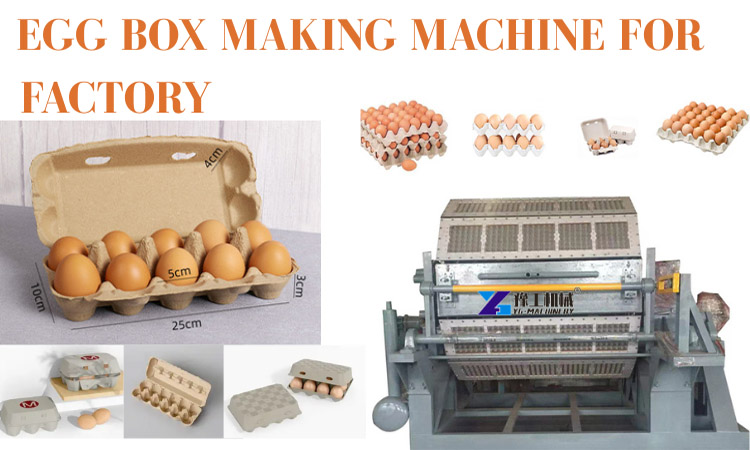
If you are buying packaging equipment for the first time, choosing the right egg box making machine can feel like a lot. Capacity, dryer type, molds, power, water use—every supplier quotes differently, and comparing them is a headache. This guide keeps it simple. You will see how the machine works, what raw materials it needs, which carton sizes (30, 24, 20, 12 and 6 eggs) it molds, the features that matter, and realistic price ranges. By the end, you will know which YG model fits your output target and budget.
Get Egg Box Making Machine Price
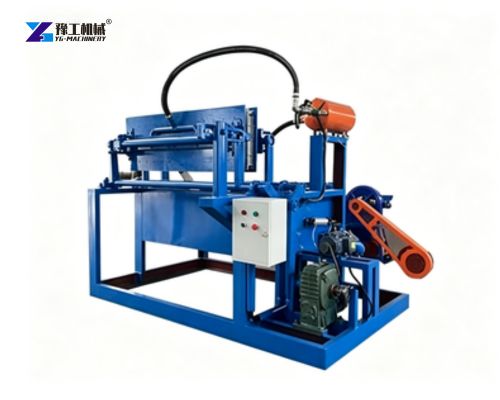
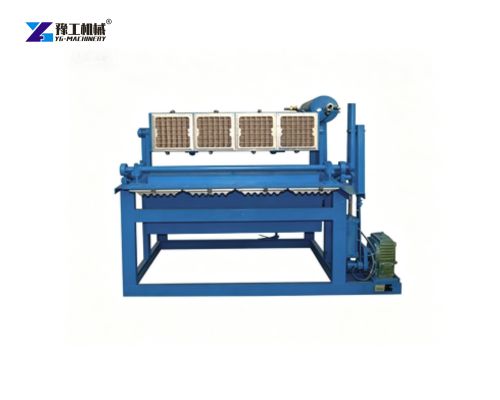
YG Egg Box Making Machine Specifications
| Model | Capacity/H | Power/hour | Paper Consumption/H | Water Consumption/H |
| YG-1500 – 4X1 | 1500pcs/h | 38kw | 120kg | 240kg |
| YG-2500 – 3X4 | 2500pcs/h | 55kw | 200kg | 400kg |
| YG-3000 – 4X4 | 3000pcs/h | 60kw | 240kg | 480kg |
| YG-4000 – 4X8 | 4000pcs/h | 95kw | 320kg | 640kg |
| YG-5000 -5X8 | 5000pcs/h | 95kw | 400kg | 800kg |
| YG-7000 -6X8 | 7000pcs/h | 120kw | 480kg | 960kg |
All six models accept OEM molds for 30-, 24-, 20-, 12- and 6-egg cartons and trays.
Get Egg Box Making Machine Price
What Is an Egg Box Making Machine?
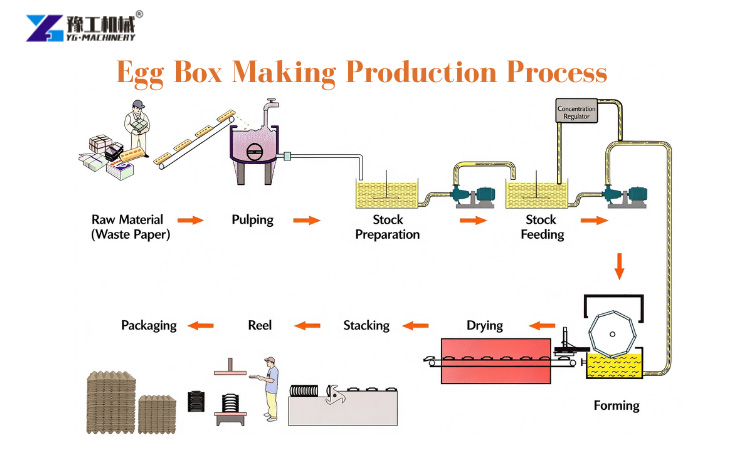
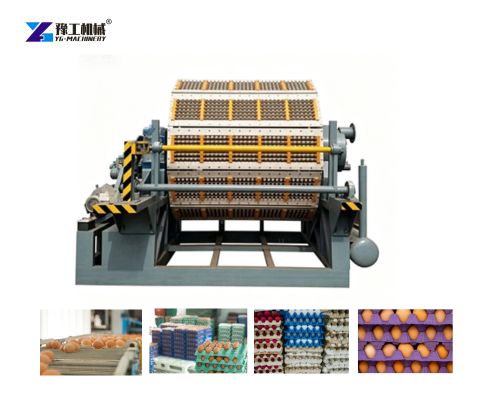
The egg box machine turns waste paper into rigid, protective molded-fiber packaging in four short steps:
- Pulping – waste paper is shredded and beaten with water into a uniform slurry.
- Molding – vacuum draws the slurry onto shaped molds; water is extracted and the fibers set into carton form.
- Drying – wet cartons are dried by sun, in a brick kiln, or through a metal drying line.
- Stacking – dry cartons are counted, stacked and packed for delivery.
The same line also produces flat egg trays, fruit trays and cup carriers—only the mold changes.
Raw Materials Your Egg Box Machine Runs On
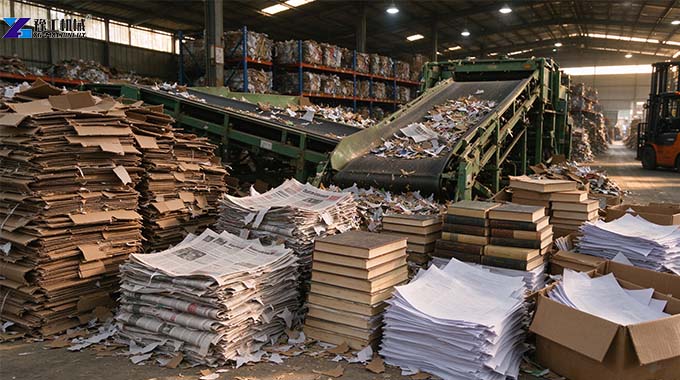
You do not need expensive virgin pulp. A standard egg box machine is designed around recycled fiber:
- Waste paper – old newspaper, carton scraps, office paper, books and kraft off-cuts. Most plants run 60–80% ordinary waste paper blended with 20–40% stronger fiber.
- Water – needed for slurry and mold washing; a recycling tank reuses most of it, so daily makeup water stays low.
- Electricity – powers the pulper, vacuum pump, forming system and conveyor; exact draws are listed per model in the table above.
- Optional additives – a small dose of wet-strength or waterproofing agent for cartons used in cold storage or humid markets.
One practical tip: keep the paper clean. Plastic film, tape and staples damage pumps and appear as defects on the carton. If you want a raw-material checklist matched to your local paper supply, just ask—we can also recommend a matching waste paper pulping line.
Molding Applications: What an Egg Tray Molding Machine Can Produce
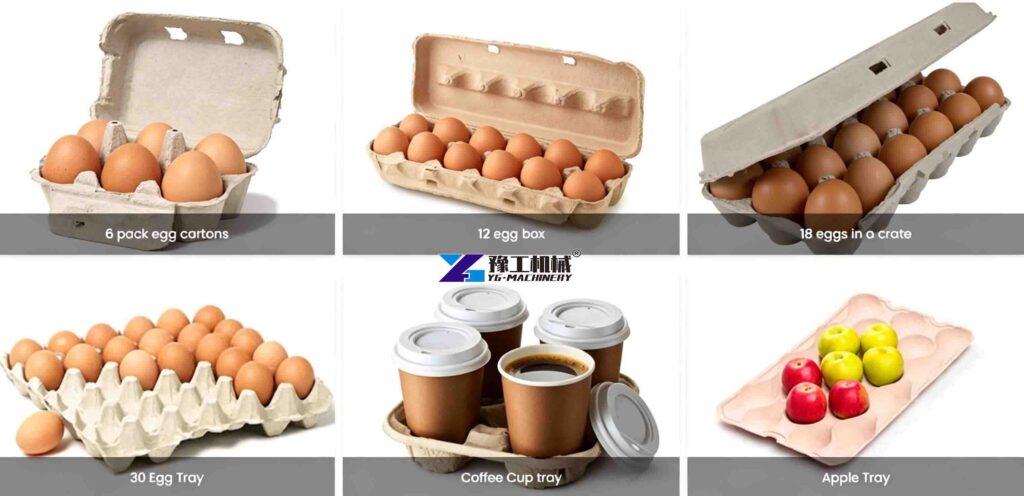
The first question buyers ask is “can it make my market’s carton size?” Yes. Every YG model uses interchangeable molds, so the same egg tray molding machine covers the full retail range:
| Pack size | Typical demand | Notes |
| 30-egg | Farms, wholesale markets | Large tray-style carton |
| 24-egg | Supermarket family packs | Two-dozen format |
| 20-egg | Mid-size retail packs | Strong demand in Africa & the Middle East |
| 12-egg (1 dozen) | Standard retail carton | Highest repeat-order volume |
| 6-egg (half dozen) | Convenience stores, premium eggs | Lidded box style |
Switching sizes is a short mold change, not a new machine. Logos, ventilation holes and surface patterns can all be tooled to your design, and the same equipment molds apple trays, coffee-cup carriers and industrial protective inserts.
Ask Us to Recommend the Right Model & Mold
7 Features of the YG Egg Box Machine
After shipping many production lines overseas, these are the features buyers tell us actually pay off:
- One machine, many products – swap molds to move between cartons, trays and fruit packs.
- Built for recycled paper – very low raw-material cost, plus a strong “green packaging” story for your customers.
- Six capacity steps, 1,500–7,000 pcs/h – start small and add forming capacity later instead of overbuying on day one.
- Flexible drying – sun drying, brick dryer or automatic metal line, chosen by climate, space and budget. It is the biggest cost variable, so our egg tray drying system guide compares the options.
- Water recycling – a closed loop cuts makeup water and keeps the workshop clean.
- Optional automation – automatic stacking, counting and hot-press trimming for high-volume plants.
- OEM support – custom molds, voltage and factory layout to fit your site.
How Much Does a Paper Egg Box Making Machine Cost?
Everyone wants this number, so here is a straight answer. Exact quotations depend on configuration, but typical FOB reference ranges are:
| Line type | Capacity | Typical price range (FOB ref.) |
| Entry, semi-auto + sun drying | 1,500 pcs/h | $8,000 – $20,000 |
| Mid-size with dryer | 2,500 – 3,000 pcs/h | $20,000 – $45,000 |
| Large automatic + metal drying line | 4,000 – 7,000 pcs/h | $50,000 – $100,000+ |
The dryer and automation level move the price more than anything else, followed by mold quantity and destination freight.
Here is a simple payback picture. A YG-3000 running 20 hours produces about 60,000 pieces per day. At an illustrative selling price of $0.03/piece and material-plus-utility cost near $0.018, gross margin is roughly $700 per day. Most buyers we work with plan an 8–18 month payback, depending on local egg-pack prices, labor and electricity. These figures are illustrative—your market will differ, so never invest on someone else’s numbers.
Send us your monthly target, local waste-paper price and electricity tariff, and we will calculate the real per-piece cost for your situation. Because the dryer alone can shift the total by 40% or more, a configured quote is far more useful than a misleading “from” price.
Egg Box Machine FAQ: 5 Questions Buyers Ask
Q1: How much does a paper egg box making machine cost?
Small semi-auto lines start around $8,000–$20,000; mid-size lines with a dryer run $20,000–$45,000; fully automatic 4,000+ pcs/h lines with metal drying reach $50,000–$100,000. Tell us your port and capacity for an exact FOB or CIF quote.
Q2: Can one machine make 30-, 24-, 20-, 12- and 6-egg packs?
Yes. Sizes change by swapping the forming and transfer molds. A new pack size usually means a new mold set, not a new machine.
Q3: What raw materials should I prepare?
Clean waste paper (newspaper, carton, kraft, office paper), water and electricity. Add wet-strength agent only if your buyers need moisture resistance.
Q4: Which drying method fits my factory?
Sun drying is cheapest but needs space and dry weather; brick kilns suit low-cost land; metal drying lines are automatic and weather-independent. We size the dryer to match your forming capacity.
Q5: Do you provide OEM, installation and training?
Yes—custom molds and logos, OEM voltage, site layout, engineer installation, operator training, warranty and spare-parts support. Full details are in our installation & shipping guide.
Ready to Choose Your YG Egg Box Making Machine?
Pick your target daily output from the parameter table, choose a drying method, and send us an inquiry. We will reply with the right YG model, mold list, exact quotation and a payback estimate based on your local costs.