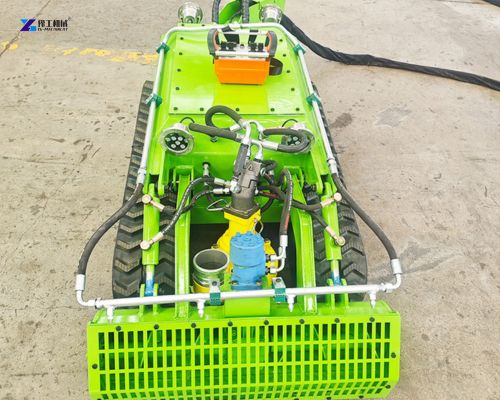
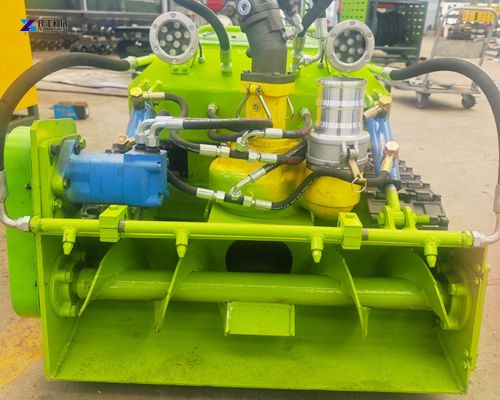
Sludge cleaning robots are designed to remove accumulated sediment from ponds, lakes, reservoirs, and other water bodies without requiring complete drainage. A sludge cleaning robot combines remote operation, underwater mobility, and sludge pumping in one system. It is especially useful for projects where traditional dredging is difficult, costly, or unsafe. For buyers looking for a compact and practical underwater dredging solution, YG provides robotic equipment designed for different sediment conditions and project sizes.
Pipeline Dredging Robot Technical Specifications
| Parameter | YG500 | YG600 | YG700 | YG800 | YG900 | YG1200 |
| Robot Dimensions (mm) | 1500*500*650 | 1500*600*650 | 1600*700*650 | 1600*850*700 | 1650*960*750 | 1900*1200*750 |
| Dredging Width (mm) | 500 | 600 | 700 | 800 | 900 | Suitable for large culverts |
| Travel Speed (m/s) | 3–15 | 3–15 | 3–15 | 3–15 | 3–15 | 0–17 m/min |
| Pump Diameter (inch) | 3 | 3 | 4 | 4 | 4 | 4or6 |
| Pump Flow (m³/h) | 100 | 100 | 160 | 160 | 200 | 250 |
| Pump Head (m) | 0–30 | 0–30 | 0–25 | 0–25 | 0–25 | 0–30 (Horizontal: 100–150m) |
| Hydraulic Station Dimensions (mm) | 2200*1200*1700 | 2200*1200*1700 | 2200*1200*1700 | 2200*1200*1700 | 2200*1200*1700 | 2120*1240*1200 |
| Main Motor Power (kW) | 18 | 18 | 22 | 22 | 22 | 45KW (50KW) or Diesel 76KW (123KW) |
| Hydraulic System Pressure (Mpa) | 0–16 | 0–16 | 0–16 | 0–16 | 0–16 | Not specified |
| Particle Size (mm) | 15 | 15 | 40 | 40 | 50 | 0–40 (customizable) |
| Winch Speed (r/min) | 0–10 | 0–10 | 0–10 | 0–10 | 0–10 | 0–10 |
| Pipe Length (m) | 30–50 Optional | 30–50 Optional | 30–50 Optional | 30–50 Optional | 30–50 Optional | 30m/pack, 20kg pressure-resistant, optional |
| Control System | Wireless Remote | Wireless Remote | Wireless Remote | Wireless Remote | Wireless Remote | Wireless Remote |
| Lighting System | Underwater LED*2 | Underwater LED*2 | Underwater LED*2 | Underwater LED*2 | Underwater LED*2 | Underwater LED*2 |
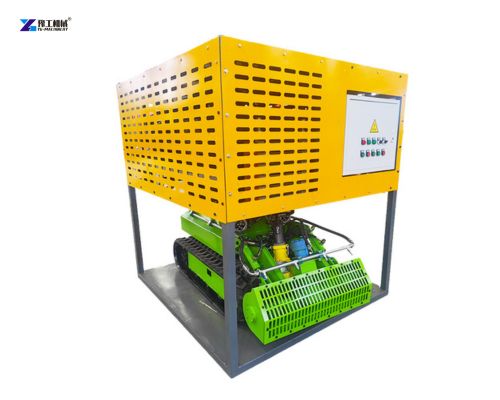
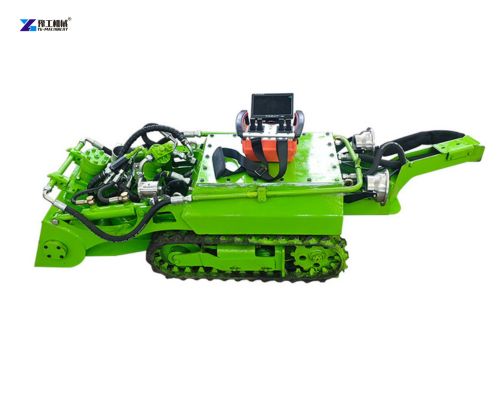
Key Benefits of an Underwater Dredging Robot
An underwater dredging robot is not simply a smaller dredger. Its value comes from combining mobility, remote operation, and continuous sediment removal.
No Need to Drain the Pond
Traditional pond cleaning may require the water to be removed before workers or excavators can enter the site.
A robotic dredging system can work underwater. This can reduce preparation time and avoid the cost of pumping out large volumes of water.
It is particularly useful for fish ponds, landscape ponds, reservoirs, and water treatment facilities.
Remote and Safer Operation
Operators can control the robot from outside the water.
This reduces the need for workers to enter muddy or unstable areas. It can also reduce exposure to contaminated sludge in certain industrial applications.
Suitable for Soft Sediment
Many ponds contain several layers of soft sludge that are difficult for conventional equipment to handle efficiently.
The robot moves across the sediment surface and continuously feeds material into the pumping system. This allows it to remove deposits without using a large excavator inside the water body.
Compact Equipment, Flexible Transport
A smaller machine can be easier to transport between different project locations.
For contractors handling multiple pond-cleaning projects, compact equipment can reduce transportation and mobilization difficulties.
Where Small Pond Dredging Equipment Makes Sense
Small pond dredging equipment is useful when the project does not justify a large conventional dredger or when access is limited.
Typical applications include:
| Application | Typical Dredging Requirement |
| Fish ponds | Remove accumulated organic sludge |
| Landscape ponds | Restore water depth and appearance |
| Reservoirs | Remove sediment from selected areas |
| Irrigation channels | Improve water flow |
| Wastewater tanks | Remove settled sludge |
| Small lakes | Maintain usable water volume |
For example, a landscape pond may have only a few hundred millimeters of sediment. A compact robotic system can work on selected areas instead of disturbing the entire pond.
For aquaculture facilities, the situation is different. Operators often want to remove accumulated sludge while keeping the pond operational. In this case, underwater robotic dredging can be a practical alternative to complete pond drainage.
Small Sand Dredge for Sale or Robotic Dredging?
Buyers searching for a small sand dredge for sale will find many types of equipment on the market. However, the right machine depends heavily on the material and working environment.
A traditional small dredge can be a good choice for projects involving larger quantities of sand or open-water excavation. A sludge cleaning robot is more attractive when the project involves soft sediment and requires controlled underwater operation.
Consider the difference:
| Factor | Small Sand Dredge | Sludge Cleaning Robot |
| Main material | Sand, silt, sediment | Sludge, silt, soft sediment |
| Working method | Conventional dredging | Remote underwater operation |
| Pond drainage | Depends on system | Usually not required |
| Access | Requires suitable access | More flexible for restricted sites |
| Operation | Often requires larger support equipment | Compact robotic system |
| Best use | Larger excavation projects | Pond and localized sediment removal |
The key is not to choose equipment based only on the word “dredge.” Look at sediment type, water depth, discharge distance, site access, and required production.
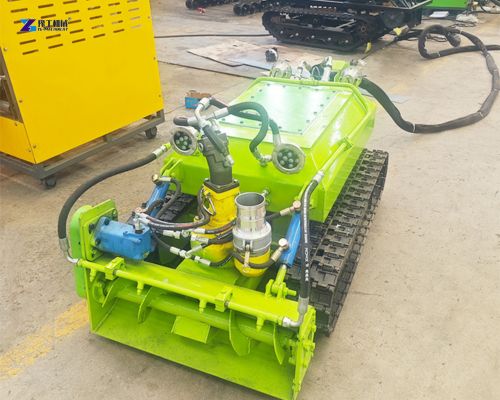
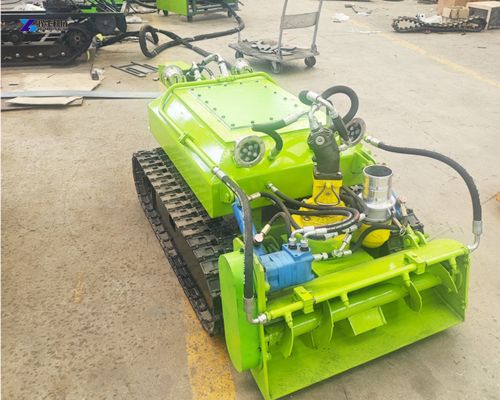
Real Project Results From Overseas Customers
Performance should always be evaluated through real applications.
In one Canadian lake dredging project, the use of robotic dredging equipment helped improve cleaning efficiency by more than 60% compared with the customer’s previous working method.
Another project in Spain reported dredging efficiency of more than three times the previous manual cleaning method.
These results do not mean every project will achieve the same output. Sludge characteristics and site conditions can vary significantly.
They do show why robotic dredging can be worth considering when labor costs are high or when conventional equipment has difficulty accessing the water body.
Sludge Cleaning Robot FAQ
Can the robot work without draining the pond?
Yes. One of the main advantages of the system is underwater operation. In many pond and lake applications, the water does not need to be completely drained before dredging begins.
What type of sediment can the robot remove?
The equipment is mainly designed for sludge, silt, soft sediment, and sand-containing deposits. The exact configuration should be confirmed according to particle size, sediment density, and thickness.
Is a sludge cleaning robot suitable for fish ponds?
Yes. It can be useful for aquaculture ponds where operators need to remove accumulated sludge while keeping the pond in operation.
Can YG customize the equipment?
YG can discuss customized configurations based on factors such as water depth, sludge characteristics, discharge distance, power supply, and project capacity.
How can I get a suitable quotation?
Send YG the basic project information, including pond size, water depth, sludge thickness, sediment type, required discharge distance, and available power supply. These details allow the equipment configuration to be evaluated more accurately.