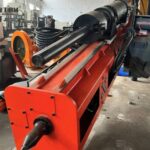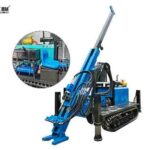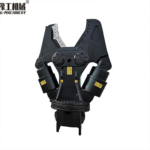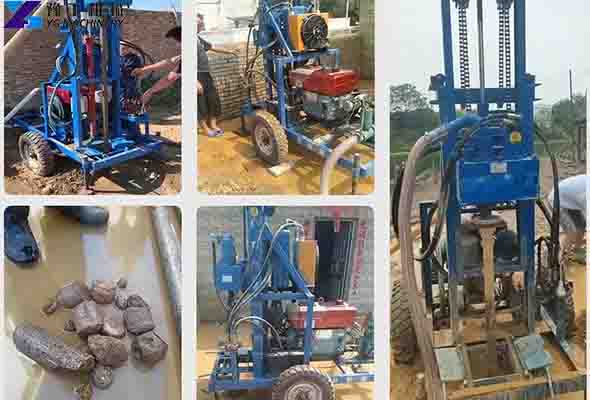
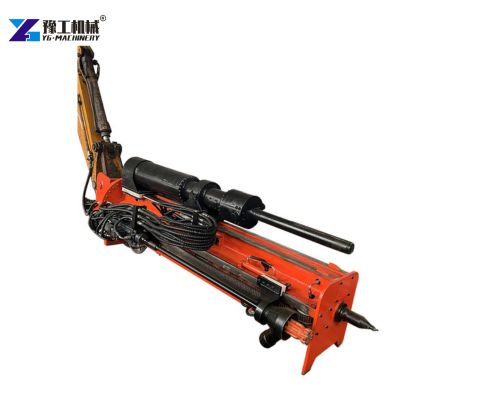
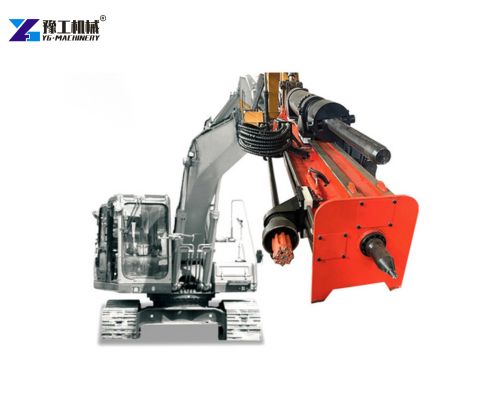
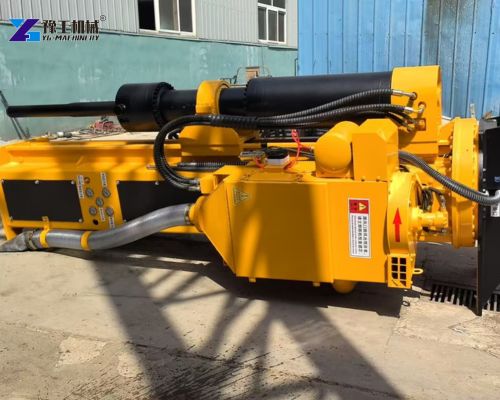
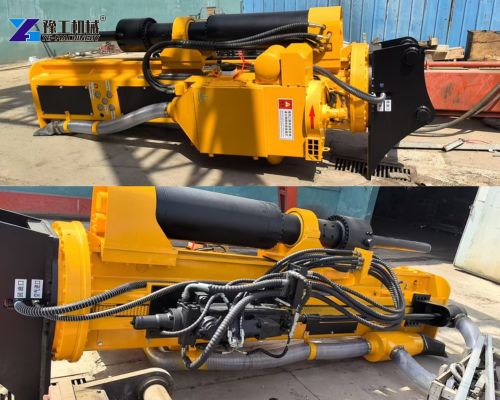
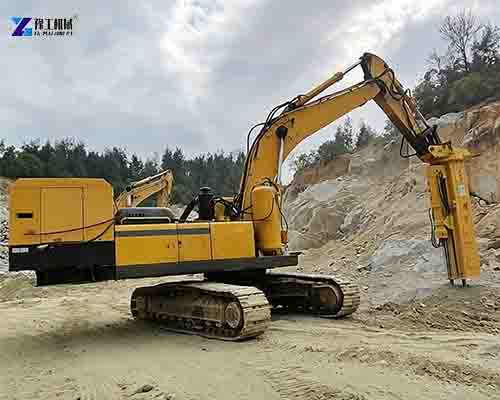
An integrated rock drill and splitter is a hydraulic attachment that mounts on an excavator. It drills holes and splits rock in one continuous operation. This machine is commonly used in mining, quarrying, tunnel excavation, and urban construction. It has three key features: no explosives, very low vibration, and almost zero noise. These benefits mean you can work safely near buildings, hospitals, or schools without permits or complaints. If you are dealing with blasting bans or tight city site rules, contact YG. We will help you select the right hydraulic crawler drill model for your excavator and rock type.
Get Your Model Recommendation Now
Specifications of Integrated Rock Drill and Splitter-OEM Support
| Drilling and splitting all-in-one machine | |
| Matching excavator model | 25T |
| Length | 3900mm |
| Width | 1300mm |
| Height | 1000mm |
| Total weight (including air compressor) | 3.2T |
| Hole diameter | 43-115mm |
| Hole depth | 1700mm |
| Average drilling speed | 1m/min |
| Impact energy | 300J |
| Impact pressure | 17.5mpa |
| Impact flow | 80-100L/min |
| Impact energy | 18kw |
| The maximum total flow of the system | 300L |
| Rated pressure (MPA) of the excavator system | 40Mpa |
| Splitting machine | 380 |
| Rated tension | 5000T |
| Splitting time | 3minutes |
| Crack width | 44929mm |
| Displacement of air compressor | 8m³/5bar |
| Dust removal system | can be increased |
| Operation method | remote control or driving |
Tell Us Your Excavator Model for a Perfect Match
Tired of Blasting Restrictions and Safety Fines?
If you work in mining or city construction, you know the headaches. Blasting permits are getting harder to get. Neighbors complain about vibration. Sometimes, a single crack in a nearby building means huge compensation costs.
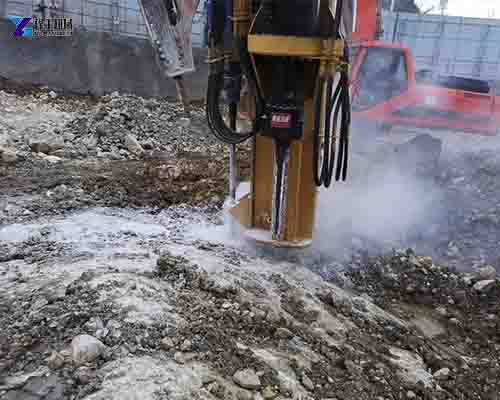
An integrated rock drill and splitter solves these problems. This machine drills its own hole and splits the rock—all without explosives. It uses the power of your excavator’s hydraulic crawler drill system to push a wedge into the rock. The wedge creates enough force to break the stone cleanly.
When you switch to this method, you gain three clear advantages:
- No more permit delays. You can start work immediately.
- No more damage claims. Vibration is so low it won’t affect nearby structures.
- No more noise fines. The process is quiet enough for hospitals and schools.
If you are tired of these restrictions, contact YG to see how this machine fits your fleet.
How Much Can You Save Per Month?
Many operators hesitate to invest in new equipment. They worry about the initial cost. However, the savings from a hydraulic crawler drill and splitter system are real and measurable.
Let’s break down where the money goes.
1. Explosives and Permits
- Explosives cost money. Permits cost time and fees.
- With the splitter, you buy no explosives. You pay no permit fees.
2. Labor and Cleanup
- Blasting creates tons of debris. You pay for loaders and trucks to remove it.
- The splitter leaves rock in manageable pieces. It reduces secondary breaking and hauling costs.
3. Equipment Wear
- Blasting often damages nearby equipment. Flying rocks can hit tracks and glass.
- The splitter works in a controlled way. It reduces wear on your other excavators.
4. Downtime
- Blasting requires empty zones. Everyone must stop and hide.
- The splitter allows continuous work. Drilling and splitting are done by one operator.
Switching to this integrated rock drill and splitter is not an expense. It is an investment that usually pays back within a few projects. If you want to calculate your exact savings, we can provide a cost comparison based on your rock type and project size.
City Work vs. Mine Work: One Machine Does Both
Construction sites are not all the same. You might need a machine for a quiet hospital parking lot this month. Next month, you might use it for a hard rock quarry.
The integrated rock drill and splitter adapts to both.
For City Construction and Tunneling:
- Vibration control is the top priority.
- The splitter prevents ground subsidence.
- It allows you to work next to subway lines and pipes.
- Noise levels stay within city limits, so you can work longer hours.
For Mines and Quarries:
- Speed is the key factor.
- The hydraulic crawler drill produces a fast feed rate.
- You can split large boulders quickly for crusher feed.
- It is a reliable backup when blasting is not allowed, such as near the mine entrance.
You can also use a rock splitter for excavator as an extra tool. This attachment fits your existing arm. It works well for secondary breaking when you don’t need the full drilling unit. It is a cost-effective way to add splitting power to your fleet without buying a whole new machine.
Explore Both City and Mine Solutions with YG
What Is the Real Daily Output?
Numbers matter. A manufacturer can say “high efficiency,” but you need to know the actual cycle time.
Here is a typical cycle for the YG integrated rock drill and splitter:
- Positioning: 1 minute. The excavator operator aligns the drill head.
- Drilling: 2 to 4 minutes. The hydraulic crawler drill creates a hole of the required depth.
- Splitting: 2 to 4 minutes. The wedge inserts and splits the rock.
- Total per hole: Usually less than 10 minutes.
With these times, one operator can finish a significant area in one shift. The machine runs smoothly without the delays of blasting clearance.
Important Factor: Rock hardness affects the drill speed. Soft limestone is faster. Hard granite is slower. However, the integrated rock drill and splitter handles most rock types effectively.
If your project involves rock with a hardness of f=4 to f=16 (Mohs scale), this machine will work. For very hard or brittle rock, you might need to adjust the splitting pressure. YG provides a setup guide for different conditions.
Get Your Project-Specific Output Estimate
How Easy Is It to Maintain This System?
Equipment is only good if it stays running. You don’t want a machine that spends all week in the repair shop.
The integrated rock drill and splitter is built for tough jobs. But it also requires basic daily care.
- Lubrication: Check the drill rod and wedge system every day. Proper grease extends part life.
- Hydraulic Oil: Keep the system clean. Use the recommended oil grade. Change filters as scheduled.
- Seal Checks: The splitting cylinder has seals that can wear. Inspect them weekly to avoid pressure loss.
One major advantage is the remote control function. The operator can stand away from the hole. This keeps them safe from dust and flying chips. It also improves their view, making the job easier and reducing mistakes.
The design of the rock splitter for excavator attachment is simple. Fewer moving parts mean less breakdown. For technical support or to order spare parts, you can always reach YG’s service team.
Contact YG for Maintenance Support and Spare Parts
Frequently Asked Questions (FAQ)
1. Is this a safe alternative to dynamite?
Yes. It does not use chemicals or fuses. Safety depends on hydraulic pressure and metal wedges. It is considered one of the safest methods for secondary breaking.
2. How deep can the splitter go?
The YG models support splitting depths up to 8000 mm with extensions. The standard drill stroke goes up to 3500 mm. You can adjust the rod length if you need deeper holes.
3. Can the hydraulic crawler drill work on wet ground?
Yes. The machine is designed for outdoor conditions. However, proper drainage on the site is always recommended to prevent the excavator tracks from sinking.
4. How long does it take to train my operator?
Training is fast. Since the control system is similar to other excavator attachments, an experienced operator can learn the function in a few hours. YG provides instruction manuals and video guides.
5. What happens if the wedge gets stuck?
This is rare. The hydraulic system has a reverse function. It can retract the wedge with full power. For very sticky materials, YG advises reducing the splitting force slightly before starting the cycle.