
If your work covers commercial flooring, industrial slab pouring, warehouse construction or renovation jobs, you already know traditional manual screeding struggles to meet today’s strict requirements for floor flatness, construction speed and consistent finished quality. A reliable laser concrete leveling machine helps you achieve high‑grade concrete surfaces, cut rework and bring down overall labour costs. However, with many different models and technical specs flooding the market, overseas procurement buyers and contractors often find it tricky to pick the unit that best fits their site conditions. This buying guide walks you through core selection factors, and highlights our key competitive advantages to help you align machine performance with real‑world project requirements.
Request a Concrete Laser Screed Price Quote
What makes a good concrete floor leveling machine stand out from generic alternatives
A quality concrete floor leveling machine uses laser transmitters and receivers paired with intelligent control hardware to automatically adjust screed‑head elevation. It combines spreading, vibrating and leveling within one single workflow. Compared with budget generic units, premium models deliver higher accuracy, stronger site adaptability and lower long‑term maintenance risk. These differences directly impact your project pass‑rate, labour input and total‑cost‑of‑ownership. Below we break down four critical factors you should evaluate before placing your order.
Factor 1: Evaluate machine configuration options for different site scenarioste scenari
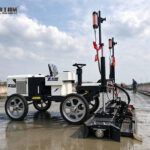
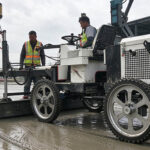
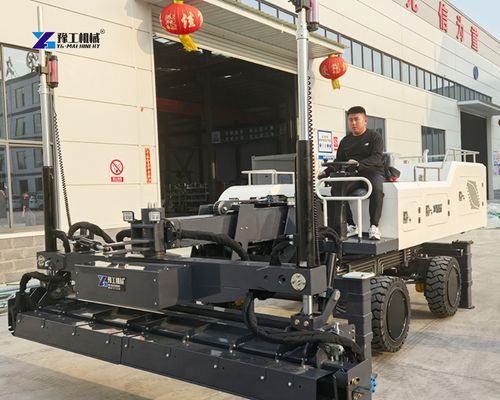
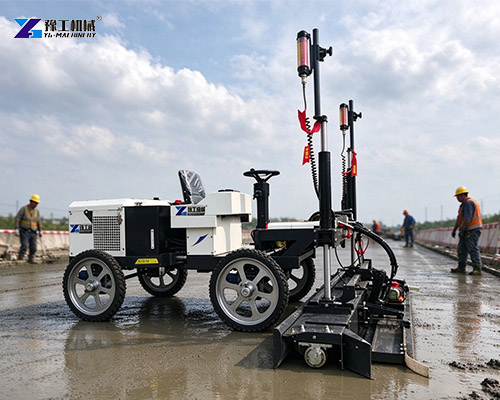
Most competing manufacturers only offer one or two fixed machine variants. This forces contractors to adjust their construction plans around equipment limitations, rather than selecting hardware that matches their job site layout. As a professional OEM manufacturer, we set ourselves apart by supplying two‑wheel, four‑wheel and telescopic‑arm configurations across our concrete floor leveling machine lineup. Each variant addresses distinct pain‑points you will encounter on‑site.
- Two‑wheel laser screed: Built for agility. It navigates narrow doorways, tight gaps around building columns and compact work zones without hassle. This works great for small workshops, retail fit‑outs and renovation projects where space is constrained.
- Four‑wheel laser screed: Delivers improved ground stability and balanced traction over large open concrete slabs. It maintains a consistent straight travel path during non‑stop pouring work, perfectly suited for warehouses, factory floors and large‑scale commercial builds.
- Telescopic‑arm laser screedaser scree: The extendable boom expands effective working coverage. Operators spend far less time repositioning the machine, cutting setup time and lifting overall pouring efficiency for wide‑area slab projects.
Our Verdict on Configuration
Go for two‑wheel units if most of your jobs involve tight indoor spaces. Pick four‑wheel machines for open‑site large slab pouring. If you frequently handle expansive projects and want to minimise machine repositioning work, telescopic‑arm models will bring you the biggest productivity gain. Having multiple ready‑to‑ship configuration options is a key advantage for buyers managing mixed‑project portfolios.
Request a Concrete Laser Screed Price Quote


Factor 2: Inspect laser control system and component brand quality
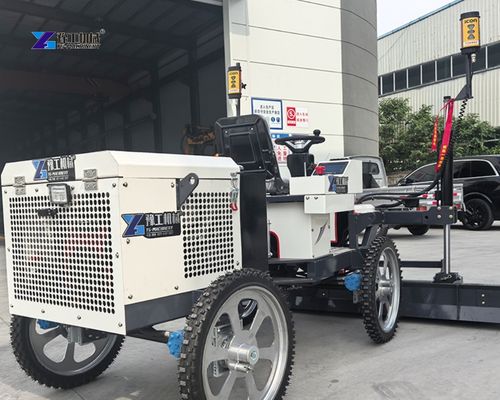
The laser system acts as the “brain” of any laser concrete leveling machine. Leveling precision, signal stability and anti‑interference performance all hinge on the quality of transmitters, receivers and control modules. Many low‑cost competitors fit unbranded generic laser assemblies. These cheap parts commonly suffer signal drift, inaccurate readings and frequent signal dropout amid construction‑site dust, vibration and temperature swings.
Our machines gain a major competitive edge by integrating globally proven premium components: US Danfoss laser control system, paired with laser transmitters sourced from Japan Topcon or Switzerland Leica.
Danfoss control hardware delivers fast auto‑leveling responses and steady signal processing even under harsh job‑site conditions. Topcon and Leica transmitters are widely respected across the construction industry for accurate grade referencing and strong anti‑interference performance, alongside extended service life. This component combination holds consistent leveling accuracy throughout the whole pour. Your finished slabs can easily satisfy strict FF/FL flatness standards, reduce rework risk and help you pass third‑party floor inspections on the first submission.
Our Verdict on Laser Systems
Always ask suppliers for clear information on laser‑component brands. Avoid machines fitted with no‑name laser assemblies. For projects requiring high‑precision floor results, configurations built around Danfoss control plus Topcon or Leica transmitters deliver much more reliable long‑term performance.
Request a Concrete Laser Screed Price Quote
Factor 3: Assess drive system reliability for continuous on‑site operation
Drive‑system performance directly determines job‑site uptime. Once fresh concrete starts setting, unexpected machine downtime can create substantial financial losses for your whole crew. Many peer‑market screeds use locally‑sourced general‑purpose drive assemblies that show high failure rates under long‑hour continuous pouring.
Our concrete floor leveling machine is equipped with imported Japanese Mitsubishi drive systems as one of our core differentiators. Mitsubishi drive hardware is well‑known for steady torque delivery, low failure frequency and long working lifespan. It maintains smooth, uniform travel speed for the screed head, preventing uneven paving triggered by fluctuating power output. Whether you run the unit at the recommended working speed of 5 m/min or adjust travel speed within the full 0‑65 m/min range, the drive system holds stable working output.
For overseas procurement buyers, global spare‑parts availability brings extra practical value. Mitsubishi replacement components are widely accessible worldwide. You will not face lengthy lead‑time waits for critical spare parts. Reduced downtime and simplified maintenance effectively bring down your long‑run operating expenses.
Our Verdict on Drive Systems
If you run frequent, non‑stop pouring work, prioritise machines fitted with well‑recognised imported drive components such as Mitsubishi. Avoid generic drive setups if project schedules leave little room for equipment breakdown delays.
Request a Concrete Laser Screed Price Quote
Factor 4: Confirm paving width, leveling thickness and vibration performance
Working parameters decide how much area your small laser screed can cover and what concrete slab conditions it can handle. Three key specs deserve your close attention: paving width, adjustable leveling‑thickness range and vibration performance.
Vibration‑head width directly impacts daily construction throughput. All four models within our YGJX series adopt a unified 2,500 mm screed head, paired with 50 Hz vibration frequency. The high‑frequency vibration thoroughly compacts fresh concrete and eliminates trapped air bubbles, delivering dense slab quality in a single pass. Models differ in maximum travel speed, overall machine weight and screed‑head control modes, covering different workload demands.
| Specification | YGJX31 | YGJX32 | YGJX33 | YGJX34 |
| Engine model | Generator set | GX390 electric start | GX390 electric start | GX390 electric start |
| Power | 2.0 kW | 13 hp / 3600 rpm | 13 hp / 3600 rpm | 13 hp / 3600 rpm |
| Fuel tank | 14.5 L | 6.5 L | 6.5 L | 6.5 L |
| Drive | Motor | Hydraulic motor | Hydraulic motor | Hydraulic motor |
| Running speed | 0–36 m/min | 0–45 m/min | 0–65 m/min | 0–45 m/min |
| Suggested working speed | 5 m/min | 5 m/min | 5 m/min | 5 m/min |
| Screed head control | Self-leveling | Electric control, self-leveling | Self-leveling | Hydraulic control, self-leveling |
| Screed head width | 2,500 mm | 2,500 mm | 2,500 mm | 2,500 mm |
| Vibration frequency | 50 Hz | 50 Hz | 50 Hz | 50 Hz |
| Operation | Walk-behind | Walk-behind | Walk-behind | Walk-behind |
| Working dimensions | 2758 × 2622 × 1980 mm | 2740 × 2659 × 1980 mm | 2578 × 2643 × 1980 mm | 2780 × 2622 × 1980 mm |
| Weight | 295 kg | 365 kg | 380 kg | 410 kg |
When reviewing specifications, double‑check whether paving width fits your regular slab layout, whether leveling‑thickness adjustment matches your floor‑design requirements, and whether vibration output achieves full concrete compaction. Insufficient vibration strength will leave voids and honeycombing inside slabs, creating hidden quality risks. Our walk‑behind small laser screed units keep a compact trailer‑friendly weight from 295 kg‑410 kg, making cross‑site transport simple without sacrificing professional‑grade leveling capability.
Our Verdict on Working Specifications
For most general commercial‑floor projects, the 2500 mm screed head and 50 Hz vibration of YGJX‑series models offer balanced flexibility and output. Pick higher‑speed variants if you need faster covering capacity for large‑area pours.
Request a Concrete Laser Screed Price Quote
Final Buying Checklist for Concrete Floor Leveling Machine
Use this checklist to screen suppliers and compare equipment options:list to sc
- Does the manufacturer supply multiple configurations (two‑wheel, four‑wheel, telescopic‑arm) that suit your range of project types?at suit yo
- Is the laser system assembled with trusted international‑brand components such as Danfoss control hardware, Topcon or Leica laser transmitters?
- Does the machine adopt high‑grade imported drive hardware like the Japanese Mitsubishi drive system for stable continuous‑work performance?
- Do paving width, adjustable leveling‑thickness and vibration‑frequency specs satisfy your typical concrete‑slab requirements?
A laser concrete leveling machine represents a substantial long‑term capital investment. Equipment built with these competitive strengths will boost your job‑site productivity, cut concrete‑material waste and consistently deliver high‑quality finished floors.liver high
If you are sourcing reliable concrete floor leveling machine solutions and want to compare our YGJX series side‑by‑side, get in touch with our engineering‑sales team. We can provide full technical datasheets, formal quotations and customised recommendations tailored for your specific project scenarios.