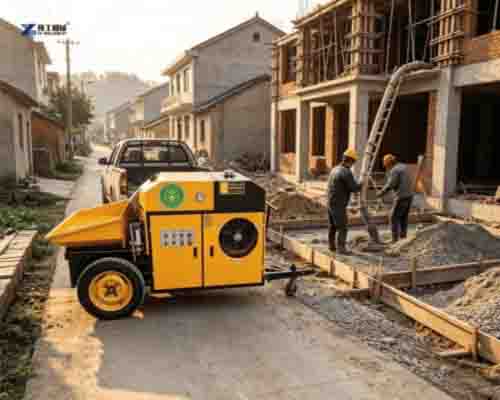
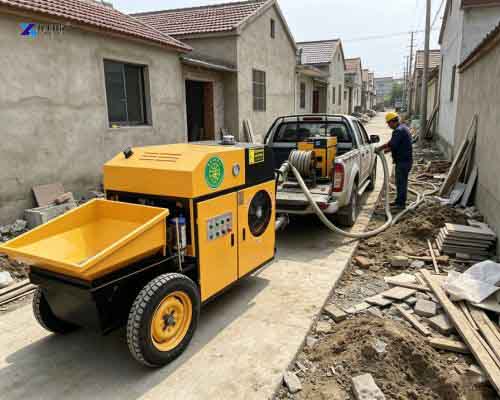
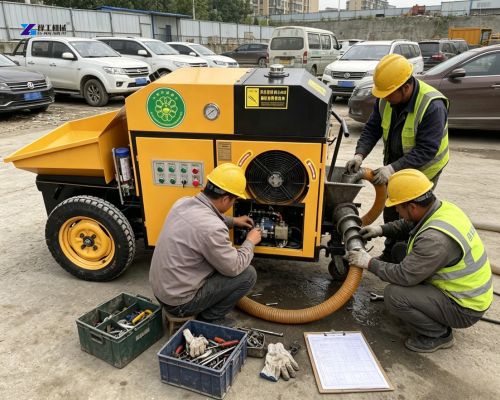
A cement concrete pump is a machine that pushes wet concrete through pipes to where you need it. It saves time and labor on construction sites. Usually, it is used for building houses, roads, bridges, and large buildings. This equipment has strong power, stable performance, and is easy to move. If you need a reliable portable mini concrete pump for your next project, contact YG to get more product information.
Get a Factory Direct Quote Now
YG Portable Concrete Pump for Sale Specifications -OEM Support
Before you compare a portable concrete pump for sale, you should understand its main technical parameters. Here are the typical specifications for a standard electric model from YG.
| Model | YG-10 | YG-20 | YG-30 | YG-40 |
| Engine | Electric/Diesel | Electric/Diesel | Electric/Diesel | Electric/Diesel |
| Power | 15kw | 22kw | 37kw | 45kw |
| Max. aggregate size | 15mm | 20mm | 30mm | 40mm |
| Conveying Capacity | 6m³/h | 10-15m³/h | 15-30m³/h | 30-40m³/h |
| Horizontal conveying distance | 100-120m | 100-120m | 150-200m | 200-350m |
| Vertical conveying distance | 20-50m | 50-60m | 80-100m | 120-140m |
| Pipe diameter | 80-100mm | 80-100mm | 80-100-125mm | 80-100-125mm |
| Outlet diameter | 80mm | 100mm | 125mm | 125-150mm |
| Material tank diameter | 100mm | 120mm | 140-160mm | 160-180mm |
| Dimension | 1.8×0.7×1.1m | 2.8×1.1×1.3m | 4*1.4*1.5m | 4*1.5*1.5m |
| Weight | 600kg | 900kg | 1800kg | 2500kg |
Get a Factory Direct Quote Now
How Does What Is A Cement Concrete Pump Work
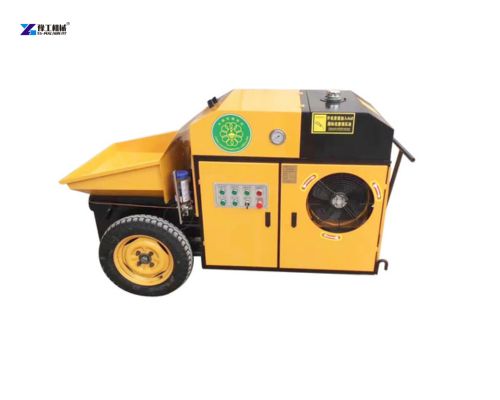
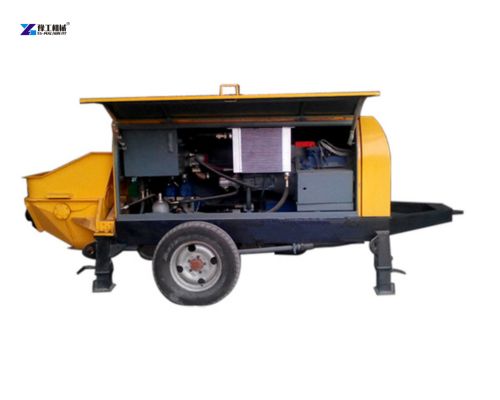
A portable concrete pump for sale uses hydraulic pressure to move concrete through pipes. The machine has a hopper that receives the concrete mix. Then, the pumping system pushes the material forward.
The main parts include:
- Hopper – holds the concrete before pumping
- Hydraulic system – creates the power to push concrete
- S-valve or swing valve – controls the flow direction
- Pipes and hoses – carry concrete to the pour site
Most pumps use an S-valve system. This design is simple and works well with many types of concrete . The hydraulic system is strong enough to push concrete up high buildings or far across sites. Some models even have wireless remote controls, so you can operate them from a safe distance .
Important Specs To Check Before Buying a Mini Concrete Pump for Sale
When you choose a cement concrete pump, you need to look at a few key numbers. These specs tell you if the machine fits your job.
Output capacity (m³/h): This is how much concrete the pump can move per hour. Small models push 8-20 m³/h . Big ones can reach 90 m³/h . Pick a size that matches your pouring speed.
Pumping pressure (MPa): Higher pressure means you can pump concrete higher and farther. Basic models have 6 MPa. Heavy-duty pumps go up to 18 MPa . For a 10-floor building, you need more pressure than for a ground floor.
Power type: Electric motors are quiet and clean. They work well in cities. Diesel engines are stronger and better for remote sites without power lines .
Aggregate size: The pump must handle the size of stones in your concrete. Most pumps accept stones up to 30-40mm . If your mix has bigger stones, choose a pump with larger pipe diameter.
Mini Concrete Pump Price – What Affects The Cost
Many buyers ask about mini concrete pump price first. The cost changes based on several factors.
Output and pressure – Bigger pumps cost more money. A 20 m³/h pump is cheaper than a 50 m³/h model.
Power system – Diesel engines add more cost than electric motors. But diesel offers freedom from power outlets .
Mobility – Pumps with wheels or tracks are easier to move. This design adds value but also increases price.
Brand and quality – Factory-direct brands like YG offer good prices. You save money by buying from the manufacturer .
For small and medium projects, mini concrete pumps are very cost-effective . They give you good performance without paying for a huge machine. If you are looking for a small concrete pump for sale, check the specs that match your site needs.
Where Can You Use A Cement Concrete Pump
This equipment works on many types of construction sites. Here are the common uses:
Houses and apartments – For pouring foundations, columns, floors, and walls. You can pump concrete up to 10 floors or more.
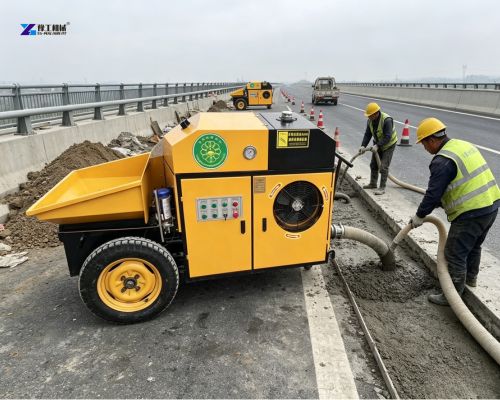
Roads and bridges – Quick placement of concrete for road repairs and bridge decks. The pump saves time compared to manual pouring.
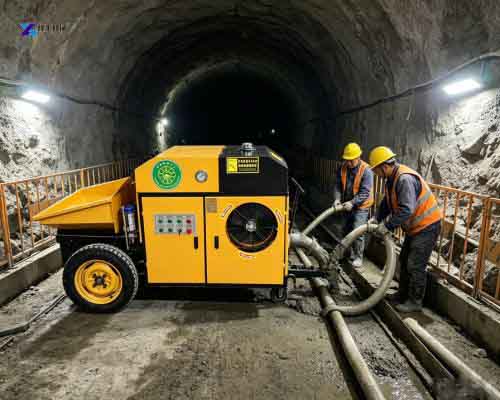
Tunnels and dams – These projects need reliable concrete placement in tight spaces. Pumps can reach hard-to-access areas.
Rural construction – In villages, electric power may not be available. Diesel pumps work well here.
Some pumps have mixing functions too. They can mix and pump concrete at the same time. This feature saves labor because you need fewer workers on site.
Electric Vs Diesel – Which One Should You Choose
This is a common question for buyers. Both types have good and bad points.
Electric concrete pumps:
- Lower running cost – electricity is cheaper than diesel
- Quiet operation – good for city sites and night work
- Zero emissions – better for indoor or enclosed areas
- Need a power source – not good for remote locations
Diesel concrete pumps:
- Work anywhere – no need for power lines
- Stronger power – better for heavy-duty jobs
- Good for outdoor sites – farms, mines, and large projects
- Higher fuel cost – but you get independence
For most small to medium jobs, electric pumps are a smart choice. They cost less to run over time. But if your site has no power, diesel is the only option.
How to Pick the Right Size Cement Concrete Pump
Choosing the right pump size helps you control your budget. A pump that is too big costs more than you need. A pump that is too small will slow down your work.
Think about your project height – For a one-floor house, a low-pressure pump works fine. For a 10-floor building, you need high pressure .
Check the horizontal distance – Pushing concrete across a flat site needs less power than going up. But long distances still need good pressure.
Consider aggregate size – If your concrete has 40mm stones, choose a pump with 125mm pipes. Smaller pipes will get blocked .
Plan for future work – If you do different jobs, choose a pump that can handle a range of outputs.
Contact YG for help with pump selection. They can match a model to your site conditions and budget.
What Is A Rotary Rig Machine And How Does It Connect
A rotary rig machine is a drilling tool used in construction. It drills holes for foundations, piles, and anchor bolts. After drilling, you need to fill those holes with concrete. This is where the cement concrete pump comes in.
The pump connects to the rig’s work cycle. It delivers concrete to fill the drilled holes quickly. This combination makes the whole job faster. Instead of moving concrete by bucket, the pump pushes it through pipes right to the drilling spot.
Using a pump with a rotary rig saves labor. It also reduces waste because concrete goes exactly where needed. This method is common in big infrastructure projects like bridges and high-rise buildings.
5 Tips to Make Your Pump Last Longer
Good maintenance keeps your pump working well for years. Follow these simple steps:
Clean the hopper daily – Leftover concrete will harden and cause blockages. Wash it out after each use.
Check the hydraulic oil – Low oil levels damage the pump. Top up regularly with the right oil type.
Inspect the wear parts – The cutting ring and glass plate wear down over time . Replace them when needed to avoid leaks.
Lubricate moving parts – Use the automatic lubrication system if your pump has one. This extends the life of key components .
Flush the pipes – After each job, push clean water through the pipes. This removes concrete residue before it hardens.
Frequently Asked Questions about Cement Concrete Pump
Q1: What is the maximum pumping height for a small cement concrete pump for sale?
A standard pump can reach up to 150 meters vertically with the right pressure . The actual height depends on the pump model and concrete mix.
Q2: How much does a mini concrete pump cost?
The mini concrete pump price ranges from about $1,700 to $4,300 for entry-level models . Bigger pumps cost more based on output and features.
Q3: Can the pump handle my concrete mix with stones?
Most pumps accept aggregate up to 30-40mm . Check the machine specs and use a filtering hopper to screen out oversized stones.
Q4: How long does it take to set up the pump on site?
Setup takes about 30-60 minutes for a trained team. This includes laying pipes, connecting hoses, and testing the system.
Q5: What maintenance does the pump need each week?
Weekly tasks include checking hydraulic oil, inspecting pipes for wear, and cleaning the hopper. Also, check all bolts and connections.
Contact YG – Your Trusted Factory Partner
YG is a professional factory that makes high-quality cement concrete pumps. We offer electric and diesel models for different jobs. Our machines have good specs, strong parts, and reliable performance.
We give you factory-direct prices. You save money because there is no middleman. Our team helps you pick the right pump for your project. We also provide spare parts and after-sales support.
If you are looking for a small concrete pump for sale or want to know the mini concrete pump price, contact YG today. Tell us your project needs. We will send you product details and a good quote.