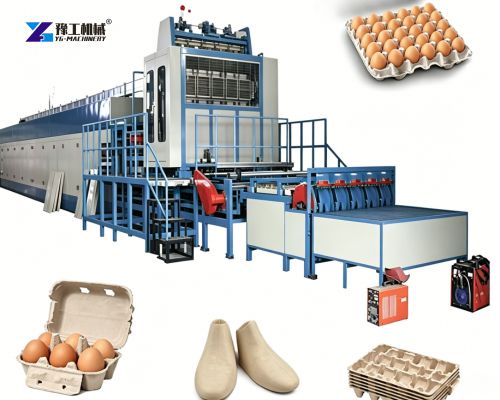
An egg crate making machine is equipment that produces paper trays and cartons for egg packaging. It uses waste paper as the raw material. This machine mixes paper with water to make pulp. Then it forms the pulp into egg trays using molds. After forming, the trays go through a drying process. The final product protects eggs during transport and storage.
Most egg crate machines use pulp molding technology. They are available in manual, semi-automatic, and fully automatic types . The fully automatic line includes pulping, forming, drying, and packaging systems. These machines are common in chicken farms, recycling plants, and packaging factories.
If you are looking for a reliable egg crate making machine, YG offers models with capacities from 1000 to 7000 pieces per hour. Contact YG for detailed product information and a free layout drawing. 【WhatsApp/WeChat/Skype/Phone】+86 159 3715 2330
Contact YG for detailed a free Egg Tray Machine Layout Drawing
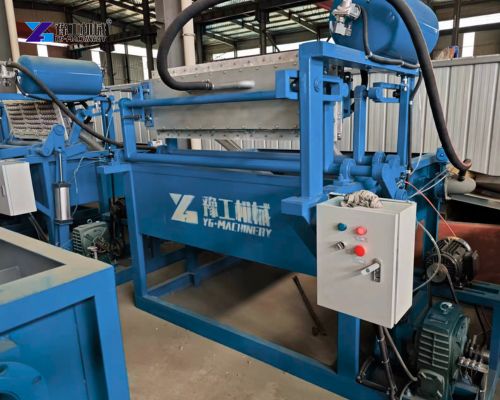
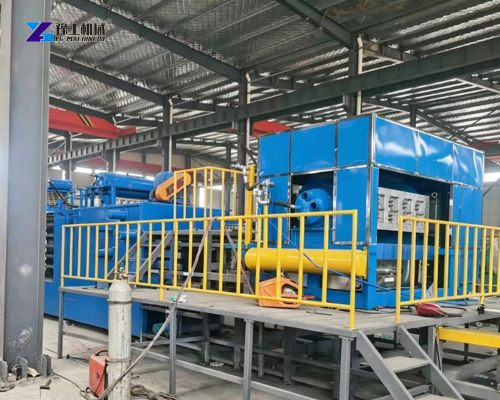
YG Egg Crate Making Machine Parameter
When choosing an egg crate making machine, you need to check the specifications carefully. Here are key parameters to consider:
| Model | Capacity/H | Power/hour | Paper Consumption/H | Water Consumption/H |
| YG-1500 – 4X1 | 1500pcs/h | 38kw | 120kg | 240kg |
| YG-2500 – 3X4 | 2500pcs/h | 55kw | 200kg | 400kg |
| YG-3000 – 4X4 | 3000pcs/h | 60kw | 240kg | 480kg |
| YG-4000 – 4X8 | 4000pcs/h | 95kw | 320kg | 640kg |
| YG-5000 -5X8 | 5000pcs/h | 95kw | 400kg | 800kg |
| YG-7000 -6X8 | 7000pcs/h | 120kw | 480kg | 960kg |
- Production Capacity: Ranges from 1000 to 7000 trays per hour depending on the model.
- Total Power: Varies from 38 kW for small units to 120 kW for high-capacity machines.
- Workers Required: Most models need 3 to 8 operators per shift.
- Workshop Space: Small models need around 100 m². Large models require up to 500 m².
- Mold Material: 304 stainless steel molds last longer and resist rust.
YG produces seven standard models of the egg crate making machine. Each model uses a rotary forming system. All parts that contact water and pulp use 304 stainless steel. This prevents rust and extends machine life by 10+ years.
Read investor business planning guide:How to Start an Egg Tray Manufacturing Business.
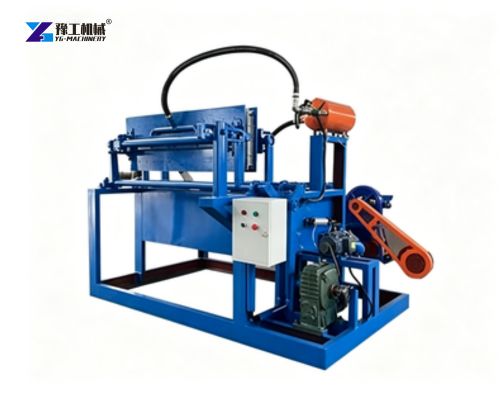
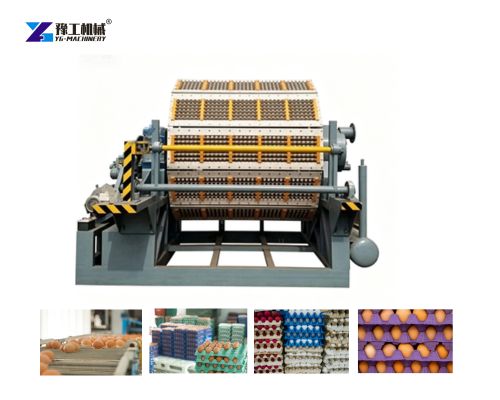
How Does an Egg Crate Making Machine Work?
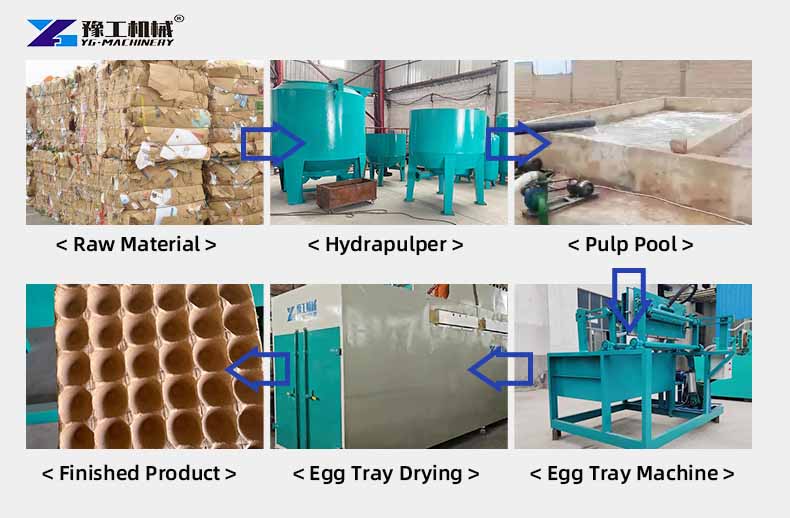
The egg crate machine operates through four main steps. Let us look at each process in detail.
Step 1: Pulping
Waste paper goes into a hydrapulper with water. A rotating drum breaks the paper down into a fiber slurry. This takes about 30-45 minutes per batch. The pulp consistency is about 1-2% fiber in water.
Step 2: Forming
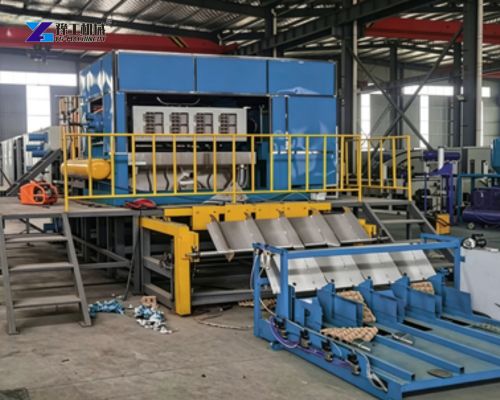
The slurry flows into a tank below the forming section. A rotary drum dips into this tank. Vacuum pressure pulls fibers onto each forming mold. Each mold produces one tray per cycle. For example, the YG-6×8 has 48 molds, producing 7000 trays per hour.
Step 3: Transfer
As the drum turns, a transfer mold picks up each wet tray. It places the tray onto a conveyor or drying rack. The transfer process uses air pressure to release the tray from the mold.
Step 4: Drying
Trays move through a drying system. Gas drying tunnels take 15-20 minutes. Sun drying takes 4-6 hours in warm weather. The drying method depends on your climate and production volume.
The entire cycle from waste paper to finished tray takes 45 minutes to 6 hours. The forming machine cycles every 8-12 seconds. This efficient process makes the egg tray maker machine a profitable investment.
Get a Customized Solution Tailored to Your Egg Production Capacity
Drying Options for Your Egg Crate Production Line
Drying is an essential part of the egg crate making process. You have several options to choose from.
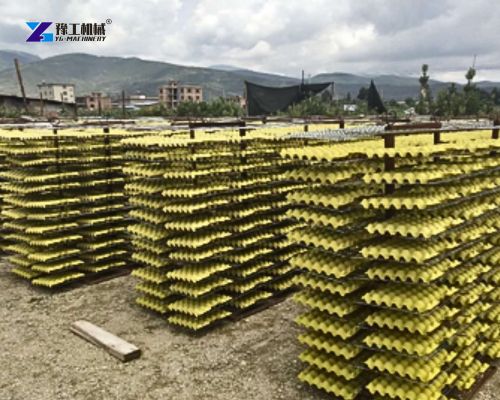
Natural Sun Drying
This is the most cost-effective method. Wet trays are placed on racks under the sun. It works well in warm, dry climates. No fuel cost is involved. However, it takes 4-6 hours and depends on weather conditions.
Brick Kiln Drying
This uses a brick structure with heating pipes. Heat sources include coal, natural gas, or diesel. It is suitable for medium-scale production.
Multi-Layer Metal Drying
This is an automatic drying system. Trays move through a heated tunnel on chains. It is fast and consistent. The drying time is only 15-20 minutes . This method is best for high-capacity production.
Trolley Drying
Wet trays are placed on trolleys. The trolleys move into a drying room. This method works well for small to medium production volumes.
Your choice of drying affects your total cost. The egg box making machine can be customized with any drying option. YG helps you choose based on your budget and production goals.
5 Key Advantages of Using an Egg Crate Making Machine
An egg crate making machine offers clear benefits for your business. Here are the top five reasons to invest in one.
- Low Raw Material Cost
Waste paper costs $30-$50 per ton. One ton makes about 12,000 egg trays. At $0.12 wholesale, that is $1,440 revenue from $50 of raw material . - Eco-Friendly Production
The machine recycles waste paper into useful products. No chemicals are used in the process. The final trays are biodegradable and compostable. - Flexible Product Range
By changing molds, the same machine can produce different products. These include egg cartons, fruit trays, seedling trays, and industrial packaging . - Low Operating Cost
The egg tray molding machine requires minimal maintenance. 304 stainless steel components resist corrosion. This reduces replacement costs over time. - High Automation Level
PLC control systems manage the production automatically. This reduces labor costs and human error. Fully automatic lines run with 3-8 workers only.
Contact us Today to Get an Analysis of Your Profit Potential
Applications of Egg Crate Making Machines
The egg crate making machine serves many industries beyond egg farming. Let us explore the main applications.
- Poultry Farms: Produce egg trays and egg cartons for packaging and transport. Farms can save on packaging costs by making their own trays.
- Recycling Plants: Convert waste paper into sellable products. This creates a new revenue stream from recycled materials.
- Fruit Packaging: Change molds to produce fruit trays for apples, pears, and other produce. The cushions protect fruit during shipping.
- Industrial Packaging: Make custom trays for electronics, automotive parts, and medical supplies. The molded pulp provides cushioning and protection.
- Seedling Nurseries: Produce nursery pots and seedling trays. These are biodegradable and can be planted directly in soil.
The egg tray maker machine is versatile. You can switch between products by changing molds. This flexibility makes it suitable for various business models. Check real overseas production case:Pulp Egg Tray Making Machine sold to Australia.
Get Factory Direct Low Price Quotation
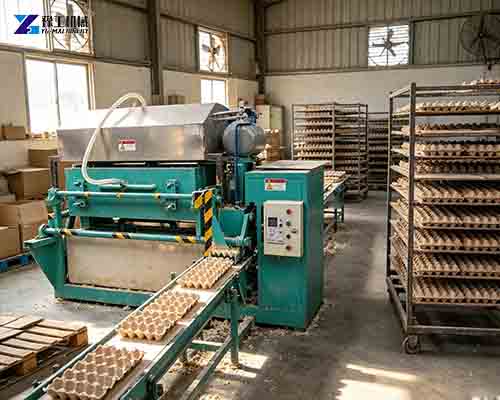
Profitability Analysis of Egg Crate Production
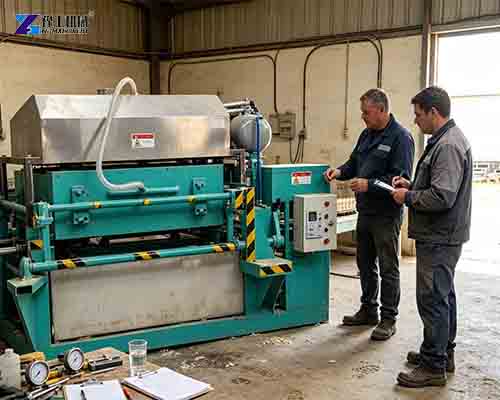
Let us look at the numbers for a typical egg crate making machine. We will use the YG-4×4 model as an example. It produces 3500 trays per hour .
Monthly Production
- Running 8 hours per day: 28,000 trays per day
- 22 working days per month: 616,000 trays per month
Monthly Costs
- Raw material: about $2,500
- Electricity + water: about $1,200
- Labor (4 workers): about $3,200
- Total monthly cost: approximately $6,900
Monthly Revenue
- Wholesale price per tray: $0.12
- Monthly revenue: approximately $73,920
Monthly Profit
- $73,920 – $6,900 = approximately $67,000
These numbers show why the egg crate making machine is a profitable investment. Even with conservative estimates, the return on investment is strong.
The actual profit depends on your local costs and selling price. YG provides a detailed cost analysis for your specific situation. Contact YG to get a customized ROI calculation.
Get Your Customized Egg ROI Calculation Report
How to Choose the Right Egg Crate Making Machine
Selecting the right egg crate making machine is important for your business success. Consider these factors before making a decision.
Production Capacity
Determine how many trays you need per hour. Small farms may start with 1000 pcs/h. Large operations may need 5000-7000 pcs/h. Choose a model that matches your target volume.
Drying Method
Sun drying is cheapest but slow. Gas drying is fast but costs more. Choose based on your climate and production schedule. If you have limited space, choose a compact drying system.
Budget
The egg crate making machine price varies by model and features. Semi-automatic machines cost less. Fully automatic lines cost more but save labor. Set a realistic budget for your investment.
Workspace
Check the space required for the complete production line. Small models need about 100 m². Large models require 500 m² or more. YG provides a free layout drawing before payment.
Automation Level
Fully automatic machines reduce labor costs. They also offer consistent quality. Semi-automatic machines require more manual work. They are suitable for small-scale production.
YG offers all seven standard models of the egg crate making machine. Our sales team will recommend the most suitable one based on your needs. We provide installation, training, and after-sales support.
Why Choose YG for Your Egg Crate Making Machine
YG is a professional manufacturer of egg crate making machines. We have supplied equipment to customers worldwide. Here is why you should choose YG. 【WhatsApp/WeChat/Skype/Phone】+86 159 3715 2330
Quality Materials: All wet-end parts use 304 stainless steel. This includes molds, pulp tank, and pipes. The steel is corrosion-resistant and lasts 10+ years.
Precision Engineering: The machine frame meets Chinese GB standards. The transmission uses high-precision components. This ensures smooth and stable operation.
Full Testing: Each unit undergoes a complete factory test before shipping. This reduces the risk of problems during installation.
After-Sales Support: YG provides lifetime technical support. Spare parts are delivered within 5 days. Our team responds within 48 hours to any issue.
Customization: We customize machines based on your requirements. This includes machine color, capacity, and drying method.
When you need a reliable egg crate making machine, YG is your trusted partner. We help you plan, install, and run your production line. Contact YG today to discuss your project.
Contact a YG engineer to Discuss Your Needs One-on-One

Frequently Asked Questions
1. What raw materials can be used in an egg crate making machine?
Any waste paper works: old newspapers, cardboard, magazines, books, and office paper. These materials are easy to find and cost little. One ton of waste paper produces about 12,000 egg trays.
2. How long does it take to dry egg trays?
It depends on your drying method. Gas drying takes 15-20 minutes. Sun drying takes 4-6 hours in warm weather. Brick kiln drying takes 1-2 hours. YG offers all four drying options based on your needs.
3. Can one machine produce different products?
Yes. By changing the molds, the egg crate making machine can produce egg trays, egg cartons, fruit trays, seedling trays, and industrial packaging. This flexibility helps you serve different markets.
4. What is the power consumption of an egg crate making machine?
Power consumption varies by model. Small units use about 40 kW total power. Large units use up to 186 kW. The actual electricity cost depends on your local rate. YG provides detailed power specifications for each model.
5. What is the lifespan of an egg crate making machine?
With proper maintenance, the machine lasts 10+ years. The 304 stainless steel components resist corrosion. YG provides spare parts and technical support to extend machine life.
Ready to start your egg crate production business? YG offers egg crate making machines with capacities from 1000 to 7000 pcs/h. Contact us for a quote and free layout drawing.