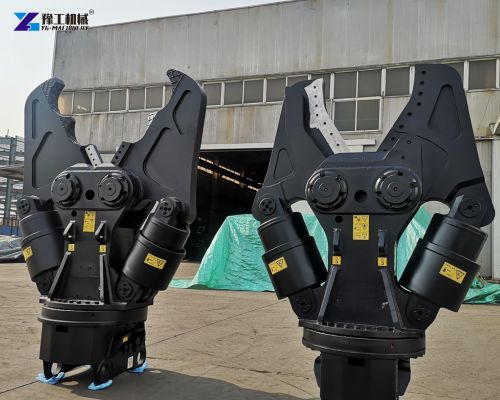
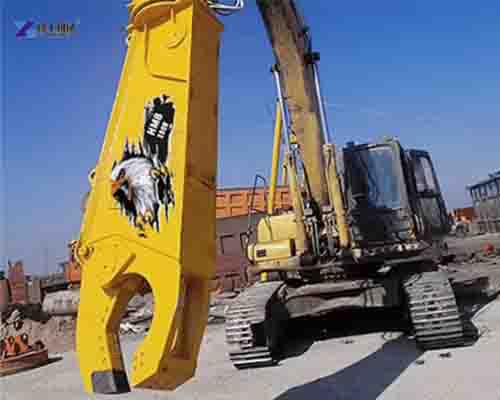
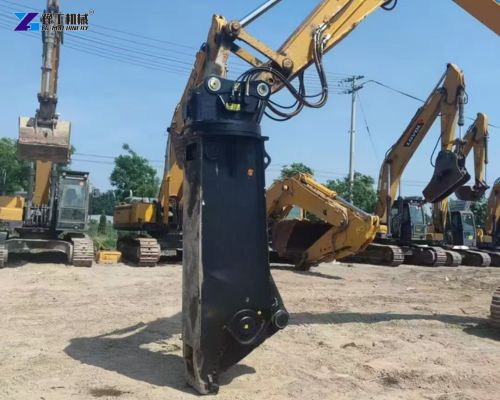
A demolition shears excavator is a hydraulic attachment designed to cut and process heavy steel during demolition and recycling work. It is commonly used for steel beams, rebar, pipes, tanks, vehicles, and industrial structures. With high cutting force, hydraulic rotation, reinforced construction, and replaceable blades, it can turn an excavator into a practical metal-cutting machine. For contractors and recycling companies looking for faster material processing, choosing the right shear matters. YG provides different excavator shear solutions based on excavator size, hydraulic performance, material type, and working conditions.
YG Excavator Shear for Sale: How to Choose the Right Model
When looking for an excavator shear for sale, buyers often start with the excavator’s operating weight. This is useful, but it is not enough.
The shear must match the excavator’s hydraulic system and lifting capacity. An oversized attachment can affect machine stability. An undersized shear may not provide enough cutting force for the intended material.
A typical YG model range can be compared as follows:
| Product | Excavator-mounted hydraulic demolition shear for waster scrap rebar | ||||
| Item | YG-620 | YG-1413 | YG-2200 | YG-2977 | YG-4052 |
| Weight kg | 620 | 1413 | 2200 | 2977 | 4052 |
| Max. Open Size mm | 334.4 | 540 | 500 | 660 | 801 |
| Width mm | 864 | 1175 | 1370 | 1600 | 1700 |
| Height mm | 1521 | 2050 | 2380 | 2600 | 2700 |
| Effective Shear Depth mm | 286 | 348 | 486 | 578 | 736 |
| Rotating Way | 360 collision | 360 hydraulic | |||
| Working Pressure Bar | 235 | 300 | 320 | 320 | 320 |
| Bottom Shear Force T | 81.2 | 138.2 | 171.2 | 330.2 | 387.2 |
| Medium Shear Force T | 50.2 | 80.2 | 100.2 | 189.2 | 218.2 |
| Tip Shear Force T | 32.2 | 53.2 | 75.2 | 127.2 | 147.2 |
| Applied Excavator Weight T | 5-9 | 10-19 | 20-25 | 28-35 | 38-50 |
These specifications provide a starting point for selection. Actual suitability should be confirmed according to the excavator and application.
For example, a 25-ton excavator may be matched with a 20–25-ton-class shear, but the hydraulic flow, pressure, boom capacity, and material being cut must still be checked.
Key Features of an Excavator Scrap Shear
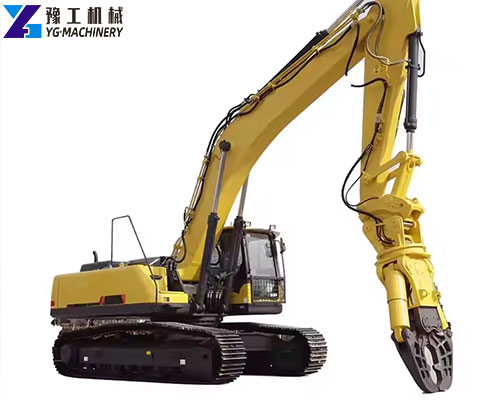
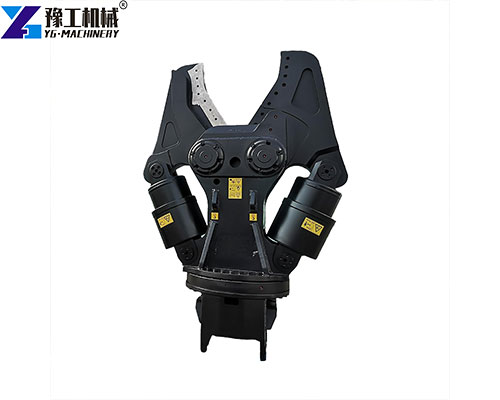
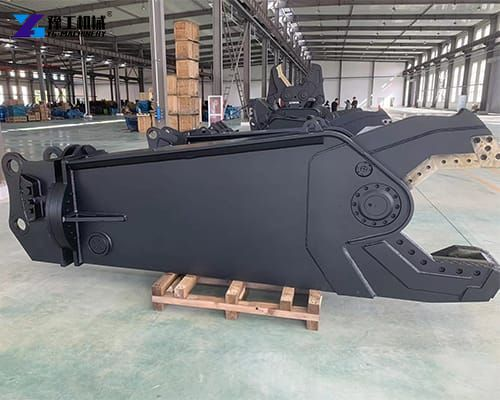
A hydraulic excavator shear is built for repeated cutting rather than simple crushing. Its main features include:
- High cutting force for heavy steel and structural materials
- Double-cylinder hydraulic design for strong and stable jaw movement
- 360° hydraulic rotation for easier positioning
- Wear-resistant blades for repeated cutting operations
- Reinforced pivot structure for demanding applications
- Multiple sizes for different excavator classes
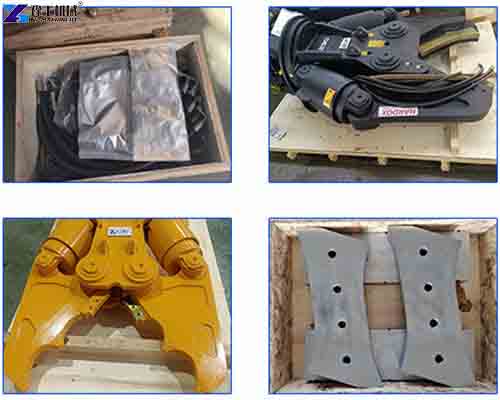
- Replaceable blades to simplify maintenance
- Compact design for better visibility and maneuverability
The right configuration depends on more than the excavator’s tonnage. Hydraulic flow, pressure, material thickness, jaw opening, and daily working hours should also be considered.
Steel Shears for Excavators: What Can They Cut?
Steel shears for excavators are mainly used to cut metal into smaller and more manageable sections.
However, the maximum jaw opening should not be confused with the maximum cutting thickness. The actual cutting result depends on material strength, cross-section, cutting position, and hydraulic pressure.
Steel Beams
Structural steel beams are common in building and industrial demolition.
A shear can cut beams into smaller sections after the structure has been safely dismantled. This makes transportation and recycling easier.
For large beams, buyers should focus on both jaw opening and cutting force. A large opening is useful for grabbing the material, but sufficient force is required to complete the cut.
Rebar and Metal Frames
Rebar can be processed after concrete structures are demolished.
The excavator shear can separate steel reinforcement and cut long sections into shorter pieces. This helps reduce the size of scrap before transportation.
For repetitive rebar processing, blade durability becomes an important purchasing factor.
Pipes and Tanks
Industrial pipes, tanks, and metal containers can have different wall thicknesses and shapes.
The shear should be selected according to the actual material rather than simply its outside diameter. Buyers should provide the pipe or tank material, wall thickness, and typical section size when requesting a quotation.
Scrap Vehicles
Vehicle dismantling is another practical application.
An excavator-mounted shear can cut frames, body components, and other steel parts. The hydraulic rotation helps the operator position the attachment before cutting.
For recycling yards, cycle time and blade maintenance are often more important than maximum cutting force alone.
Heavy Steel Plate
Large steel plates can be difficult to handle when they are still in full-size sections.
A suitable shear can divide them into smaller pieces for easier sorting and transport. The cutting method should be selected according to plate thickness and steel grade.
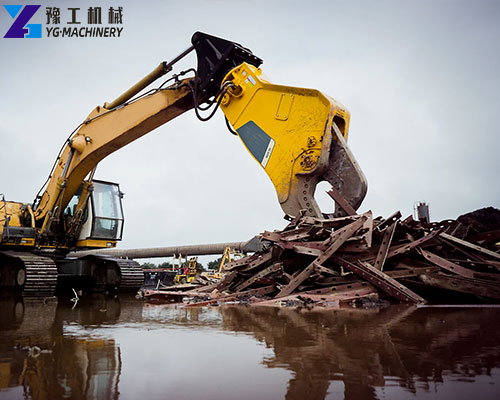
Excavator Demolition Shears for Different Applications
The same hydraulic shear can be used in different industries, but the working requirements can vary significantly.
Building Demolition
During building demolition, the shear can process exposed steel beams, columns, reinforcement, and other metal structures.
The operator needs good control over the attachment position. Hydraulic rotation can help adjust the cutting angle without repeatedly repositioning the excavator.
For demolition contractors, attachment weight is also important. The excavator should maintain stable lifting and operating performance when the shear is fully loaded.
Structural Steel Dismantling
Steel buildings, warehouses, workshops, and industrial structures often contain large amounts of reusable steel.
Instead of cutting every section manually, an excavator-mounted shear can process steel closer to the demolition area.
This can reduce secondary handling and make the material easier to sort. For projects where recovered steel has value, clean and controlled cutting can also simplify downstream processing.
Scrap Metal Recycling
Recycling yards normally deal with a mixture of steel products.
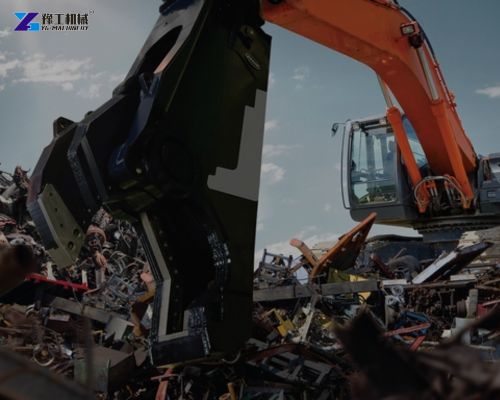
The material may include pipes, beams, vehicle parts, machinery frames, and irregular scrap. An excavator scrap shear provides a flexible way to reduce oversized material.
Here, buyers should look beyond the maximum cutting force. Blade wear, rotation, cycle time, maintenance access, and hydraulic compatibility can have a bigger effect on long-term operating cost.
Car Dismantling
Vehicle recycling requires repeated processing rather than occasional heavy cuts.
The operator may need to reposition the attachment many times during a working cycle. A responsive rotation system and suitable jaw opening can make the process easier.
The shear should also be sized for the excavator used in the recycling yard. A larger attachment is not automatically better if it reduces machine stability or slows down operation.
Industrial Plant Dismantling
Old factories often contain pipes, steel frames, tanks, platforms, and heavy machinery.
A demolition shear can be used as part of a larger dismantling process. Different materials may require different cutting positions and techniques.
Before purchase, buyers should provide information about the heaviest and thickest materials expected during normal operation.
Two Practical Excavator Shear Application Cases
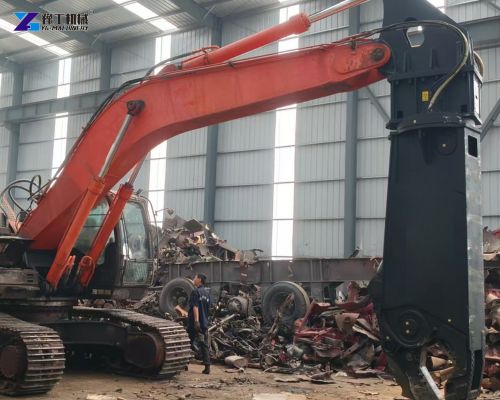
Case 1: Scrap Metal Processing in Azerbaijan
A YG excavator metal shear was supplied for an industrial application in Azerbaijan.
The customer needed equipment for processing metal materials with an excavator-based solution. Instead of relying entirely on stationary cutting equipment, an excavator-mounted shear provided mobility around the working area.
The project highlights an important point for recycling companies: mobility can be as valuable as cutting force.
When scrap materials are spread across a working yard, the excavator can move between material piles while the shear handles cutting and size reduction.
For similar projects, buyers should confirm the excavator’s hydraulic specifications and the typical size and thickness of the scrap before choosing the attachment.
Case 2: Heavy Steel Structure Demolition
A second typical application is the dismantling of large steel structures.
Steel beams and columns may need to be cut into manageable sections before they are transported away from the demolition site.
A hydraulic shear mounted on a suitable excavator allows the operator to approach the structure, position the jaw, and cut the steel without bringing a separate cutting machine to every location.
For this type of work, jaw opening, cutting force, attachment weight, and rotation range all affect productivity.
The key is to select the attachment according to the actual steel profile rather than relying only on a general “heavy-duty” label.
Demolition Shears Excavator FAQ
What is a demolition shears excavator used for?
It is mainly used for cutting steel and processing metal during demolition, dismantling, and recycling. Typical materials include beams, rebar, pipes, tanks, vehicle frames, and steel structures.
How do I choose the right excavator shear size?
Start with the excavator’s operating weight, but also check hydraulic pressure, hydraulic flow, boom capacity, and the attachment’s weight. The material type and thickness should also be considered.
What materials can an excavator scrap shear cut?
It can be used for many steel and metal materials, including structural beams, pipes, plates, vehicle frames, and industrial scrap. Actual cutting capacity depends on material strength, thickness, and cutting position.
Are steel shears for excavators suitable for scrap recycling?
Yes. They are widely suited to applications where oversized steel needs to be reduced before sorting, transport, or further processing. For recycling yards, blade durability and cycle time are important factors.
What hydraulic information is needed before buying an excavator shear?
The manufacturer normally needs the excavator’s hydraulic pressure and flow, along with its operating weight and model. Providing these details helps confirm whether the attachment can work correctly with the excavator.
Get the Right Demolition Shears Excavator for Your Job
A hydraulic shear should be selected according to the actual job, not just its advertised cutting force.
The excavator, hydraulic system, steel type, material thickness, jaw opening, attachment weight, and working frequency all affect the final result.
For demolition contractors, scrap processors, and industrial equipment buyers, the right match can make steel cutting more controlled and practical.
YG is a professional manufacturer of hydraulic demolition and metal-processing attachments. If you are looking for a demolition shears excavator, excavator scrap shear, excavator shear for sale, or steel shears for excavators, send YG your excavator specifications and application details.